Zebra Shark
Stegostoma tigrinum
- Diet
- Primarily shelled molluscs, with crustaceans, small bony fishes, and possibly sea snakes also taken.
- Size
- Up to 2.5 m
- Range
- Tropical Indo-Pacific, from southern Africa and the Red Sea eastward to the western Pacific and south to northern Australia.
- Habitat
- Bottom-dwelling in the intertidal zone to 62 m, over continental and insular shelves; adults and large juveniles use coral reefs, rubble, and sandy areas.
- Lifespan
- Estimated at 25–30 years in the wild.
- Activity
- Nocturnal. It usually rests motionless on the sea floor during the day and becomes more active at night or when food is available.
- Reproduction
- Oviparous. Females lay large egg capsules, often in batches of around four, and anchor them to underwater structures with adhesive fibers.
- Conservation
- Endangered worldwide according to the IUCN Red List; assessed as Least Concern off Australia.
- What to notice
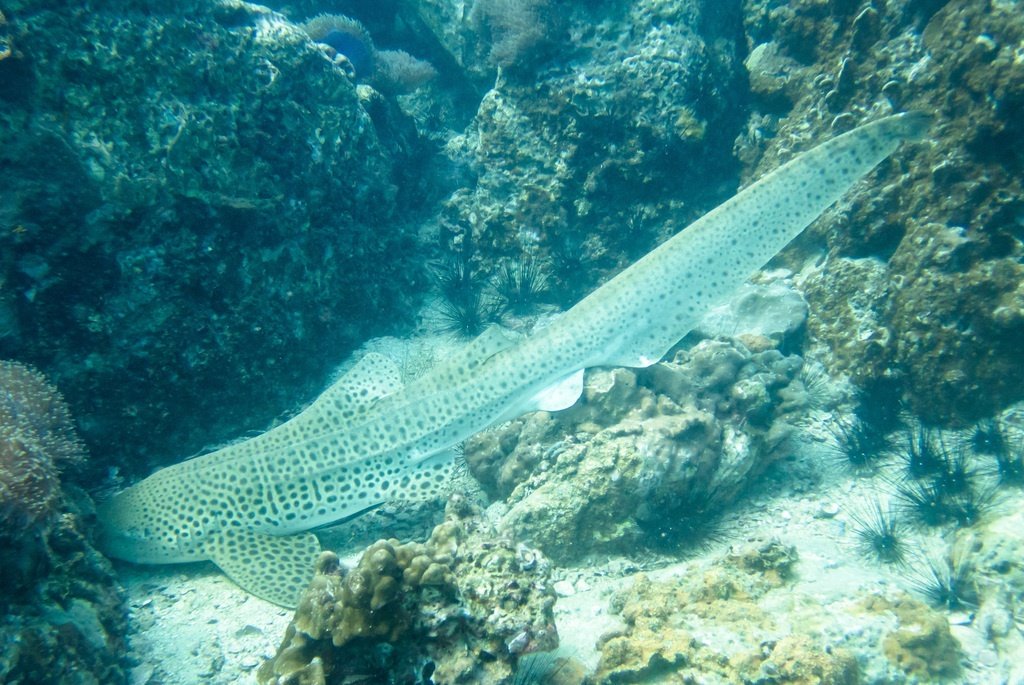
- Young zebra sharks under 50–90 cm have light vertical stripes on a brown background. As they grow, the stripes break up and become dark spots on a pale background.
- Finding food
- A slender body lets this shark wriggle into narrow reef holes and crevices. Its small mouth and muscular mouth cavity create suction that helps pull prey out.
- Remarkable adaptations
- During the day, zebra sharks may rest in reef channels while facing into the current with their mouths open, using the faster, more oxygenated water in these confined spaces.
- Life cycles
- Females secure their egg capsules underwater with hair-like adhesive fibers. They may circle vertical structures such as reef outcrops so the fibers catch and hold the eggs in place.
- Life cycles
- Two reported females produced young without mating, and a later study observed parthenogenesis—the development of offspring without fertilization—in females regardless of their sexual history.
Facts
- Young zebra sharks under 50–90 cm have light vertical stripes on a brown background. As they grow, the stripes break up and become dark spots on a pale background.
- A slender body lets this shark wriggle into narrow reef holes and crevices. Its small mouth and muscular mouth cavity create suction that helps pull prey out.
- During the day, zebra sharks may rest in reef channels while facing into the current with their mouths open, using the faster, more oxygenated water in these confined spaces.
- Females secure their egg capsules underwater with hair-like adhesive fibers. They may circle vertical structures such as reef outcrops so the fibers catch and hold the eggs in place.
- Two reported females produced young without mating, and a later study observed parthenogenesis—the development of offspring without fertilization—in females regardless of their sexual history.
Print and study the Zebra Shark
This species is included in: