Nurse Shark
Ginglymostoma cirratum
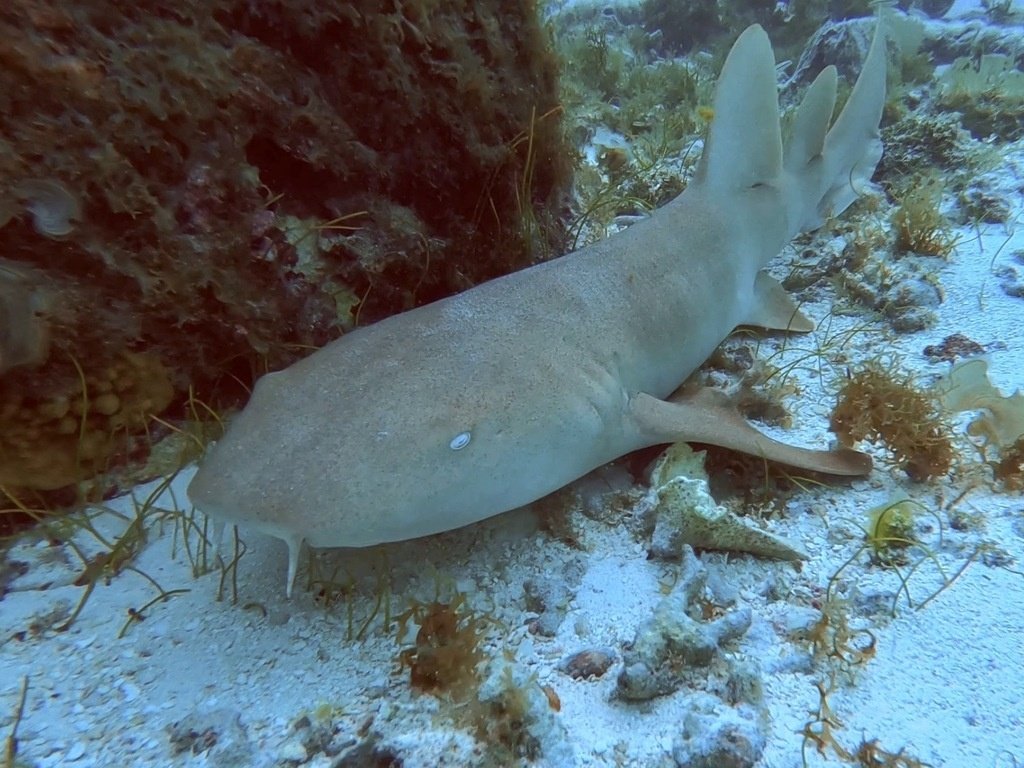
- Diet
- An opportunistic predator that feeds mainly on small fish and also takes crustaceans, molluscs, sea urchins, tunicates, anthozoans and algae.
- Size
- Up to 3.08 m
- Range
- A wide but patchy distribution in tropical and subtropical coastal waters of the Eastern Atlantic, Western Atlantic and Eastern Pacific.
- Habitat
- Typically an inshore, bottom-dwelling shark. Juveniles use shallow reefs, seagrass flats and mangrove islands; older sharks occur around deeper reefs and rocky areas.
- Activity
- Typically solitary and nocturnal, feeding on the seabed at night. During the day, nurse sharks may form large, sedentary groups.
- Reproduction
- Ovoviviparous: fertilized eggs hatch inside the female. The mating cycle is biennial; gestation lasts six months, and a typical litter contains 21–29 pups born at about 30 cm long.
- Conservation
- Vulnerable; globally assessed in the IUCN Red List of Threatened Species.
- Finding food
- A nurse shark can draw prey into its mouth by suction, producing suction forces among the highest recorded for an aquatic vertebrate. Its small mouth does not prevent it from handling larger food: it may suck and spit or shake its head to break prey down.
- Social lives
- During the day, nurse sharks may rest together in large, sedentary groups. At night they leave shelter and search the seabed for food in shallower water.
- Seasonal journeys
- This is one of the few shark species known to return repeatedly to the same mating sites. More generally, nurse sharks show strong site fidelity, meaning they tend to remain loyal to particular places.
- Life cycles
- Newborn nurse sharks are spotted, but the pattern fades as they grow and adults become brownish. The young are about 30 cm long at birth.
- Courtship
- A single brood can have more than one father. In a 10-year study, researchers found 14 genotypes in one brood, supporting multiple paternity and increased genetic variation among the young.
Facts
- A nurse shark can draw prey into its mouth by suction, producing suction forces among the highest recorded for an aquatic vertebrate. Its small mouth does not prevent it from handling larger food: it may suck and spit or shake its head to break prey down.
- During the day, nurse sharks may rest together in large, sedentary groups. At night they leave shelter and search the seabed for food in shallower water.
- This is one of the few shark species known to return repeatedly to the same mating sites. More generally, nurse sharks show strong site fidelity, meaning they tend to remain loyal to particular places.
- Newborn nurse sharks are spotted, but the pattern fades as they grow and adults become brownish. The young are about 30 cm long at birth.
- A single brood can have more than one father. In a 10-year study, researchers found 14 genotypes in one brood, supporting multiple paternity and increased genetic variation among the young.
Print and study the Nurse Shark
This species is included in: