Great Hammerhead
Sphyrna mokarran
- Diet
- An active predator of crustaceans, cephalopods, bony fishes, smaller sharks, rays and skates, especially stingrays.
- Range
- Tropical and warmer ocean waters around the world, including the Atlantic, Indian and Pacific oceans.
- Habitat
- From very shallow inshore water to offshore depths, especially around coral reefs and other coastal habitats.
- Lifespan
- Typically 20–30 years; an exceptional individual was estimated at 40–50 years.
- Activity
- Solitary and nomadic. It tends to hunt around dawn or dusk and is a strong swimmer; it may swim on its side in a posture called rolled swimming.
- Reproduction
- Viviparous, meaning the young develop inside the mother and are born live. Females breed every two years; mating has been observed near the surface.
- Conservation
- Critically Endangered globally on the IUCN Red List, assessed as of 2019.
- Finding food
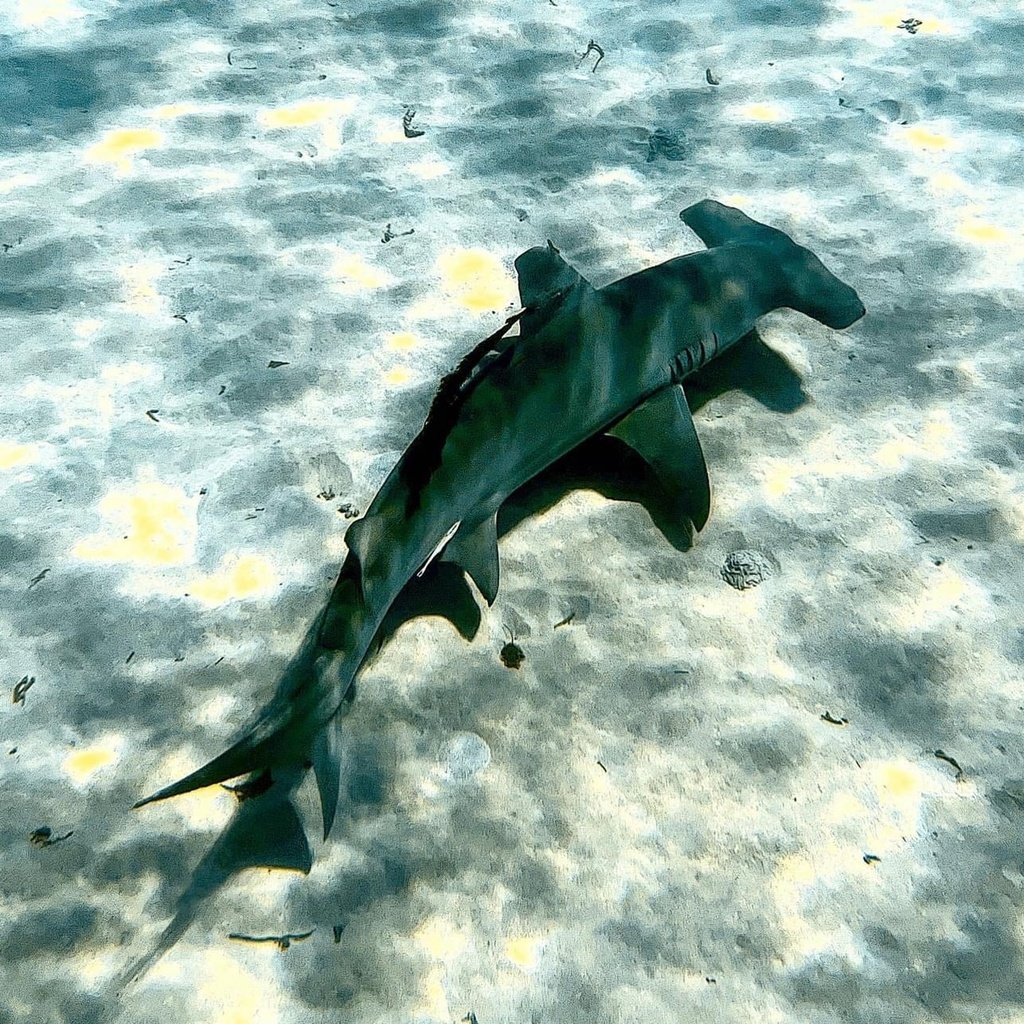
- The broad, nearly straight-edged hammer-shaped head helps the shark find and handle rays. Electrical sensors on the underside detect rays buried in sand, and the head can pin a ray to the seafloor while the shark bites.
- Getting around
- A great hammerhead may swim rolled onto its side, using its very large dorsal fin to help generate lift. This posture reduces drag and movement costs according to the cited study.
- Courtship
- Unlike most sharks, which mate on or near the seafloor, great hammerheads have been observed mating near the surface. A reported pair swam upward together before mating at the surface.
- Social lives
- Great hammerheads are usually solitary. Other reef sharks tend to give them a wide berth, while pilot fish sometimes accompany them and yellow jacks have been seen rubbing against their flanks, possibly removing parasites.
- What to notice
- Young great hammerheads have a rounded front edge to the head, unlike the nearly straight front edge that helps identify adults.
Facts
- The broad, nearly straight-edged hammer-shaped head helps the shark find and handle rays. Electrical sensors on the underside detect rays buried in sand, and the head can pin a ray to the seafloor while the shark bites.
- A great hammerhead may swim rolled onto its side, using its very large dorsal fin to help generate lift. This posture reduces drag and movement costs according to the cited study.
- Unlike most sharks, which mate on or near the seafloor, great hammerheads have been observed mating near the surface. A reported pair swam upward together before mating at the surface.
- Great hammerheads are usually solitary. Other reef sharks tend to give them a wide berth, while pilot fish sometimes accompany them and yellow jacks have been seen rubbing against their flanks, possibly removing parasites.
- Young great hammerheads have a rounded front edge to the head, unlike the nearly straight front edge that helps identify adults.
Print and study the Great Hammerhead
This species is included in: