Cownose Ray
Rhinoptera bonasus
- Diet
- Feeds mainly on hard-shelled organisms, especially mollusks and crustaceans; scallops and clams are preferred.
- Range
- Western Atlantic and Caribbean, from New England to southern Brazil; also occurs along the United States East Coast, in Brazil, and in the Gulf of Mexico.
- Habitat
- Shallow coastal and estuarine waters, including areas with a wide range of salinities.
- Lifespan
- 16–21 years, depending on sex; oldest recorded: females 21 years and males 18 years in Chesapeake Bay
- Activity
- Migratory and social; it feeds mainly in the early morning or late afternoon and moves north in late spring and south in late fall.
- Reproduction
- Breeds from April through October. Females mature at about 7–8 years and males at about 6–7 years; embryos develop inside the mother and live young are born after a gestation believed to last 11–12 months.
- Conservation
- Vulnerable on the IUCN Red List in 2019; the source attributes the listing to extensive overfishing and commercial fishing.
- What to notice
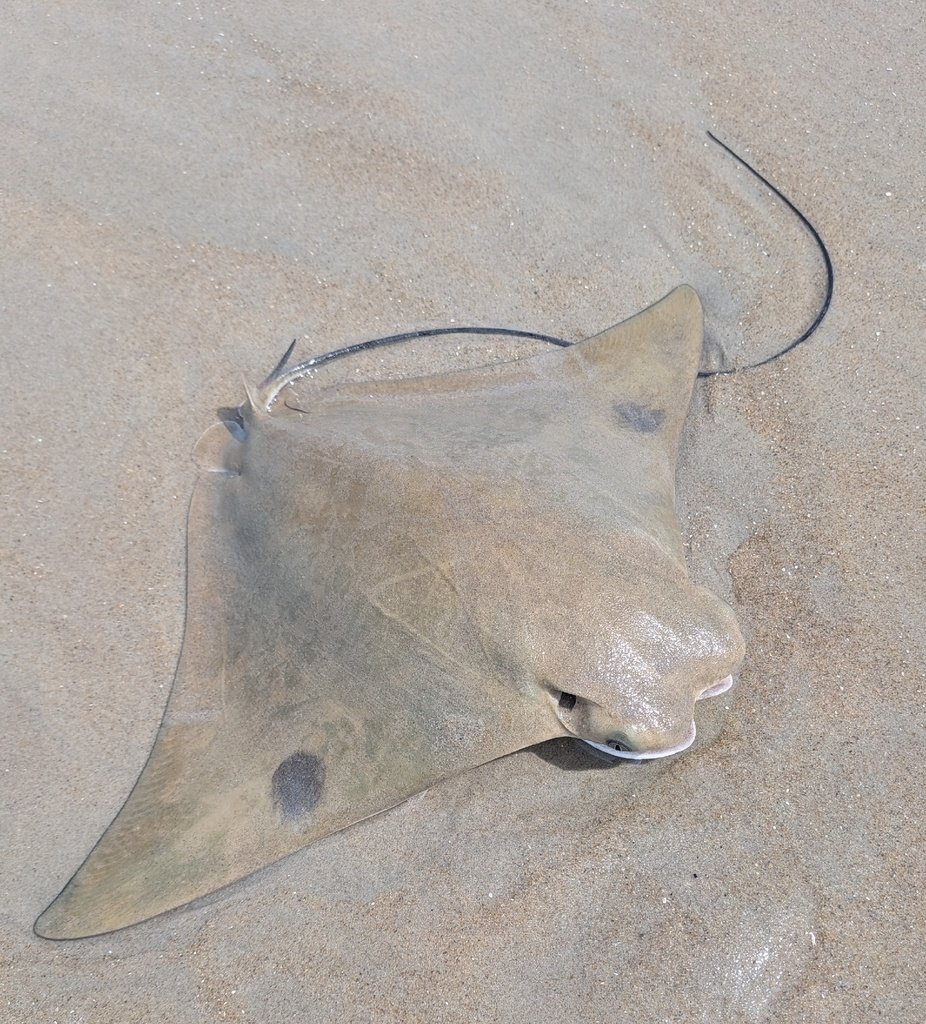
- Its broad head has two front lobes that give the ray a cow-nose outline. The same shape can make a fin tip at the surface look deceptively like a shark’s dorsal fin.
- Finding food
- Cownose rays crush shellfish with dental plates and exceptionally robust jaws. They can capture prey by suction, while their head lobes help push food toward the mouth.
- Seasonal journeys
- Large schools travel north in late spring and south in late fall. In Chesapeake Bay, males have been observed leaving before females, which remain with their pups in estuarine waters.
- Life cycles
- A female may carry her developing young for 11–12 months. The young are born live and emerge tail first.
- Raising the next generation
- Cownose rays gather in Chesapeake Bay in late spring and summer for mating and nursery purposes, often near the water’s surface.
- Venomous
- Venomous
Facts
- Its broad head has two front lobes that give the ray a cow-nose outline. The same shape can make a fin tip at the surface look deceptively like a shark’s dorsal fin.
- Cownose rays crush shellfish with dental plates and exceptionally robust jaws. They can capture prey by suction, while their head lobes help push food toward the mouth.
- Large schools travel north in late spring and south in late fall. In Chesapeake Bay, males have been observed leaving before females, which remain with their pups in estuarine waters.
- A female may carry her developing young for 11–12 months. The young are born live and emerge tail first.
- Cownose rays gather in Chesapeake Bay in late spring and summer for mating and nursery purposes, often near the water’s surface.
Print and study the Cownose Ray
This species is included in: