Blue Shark
Prionace glauca
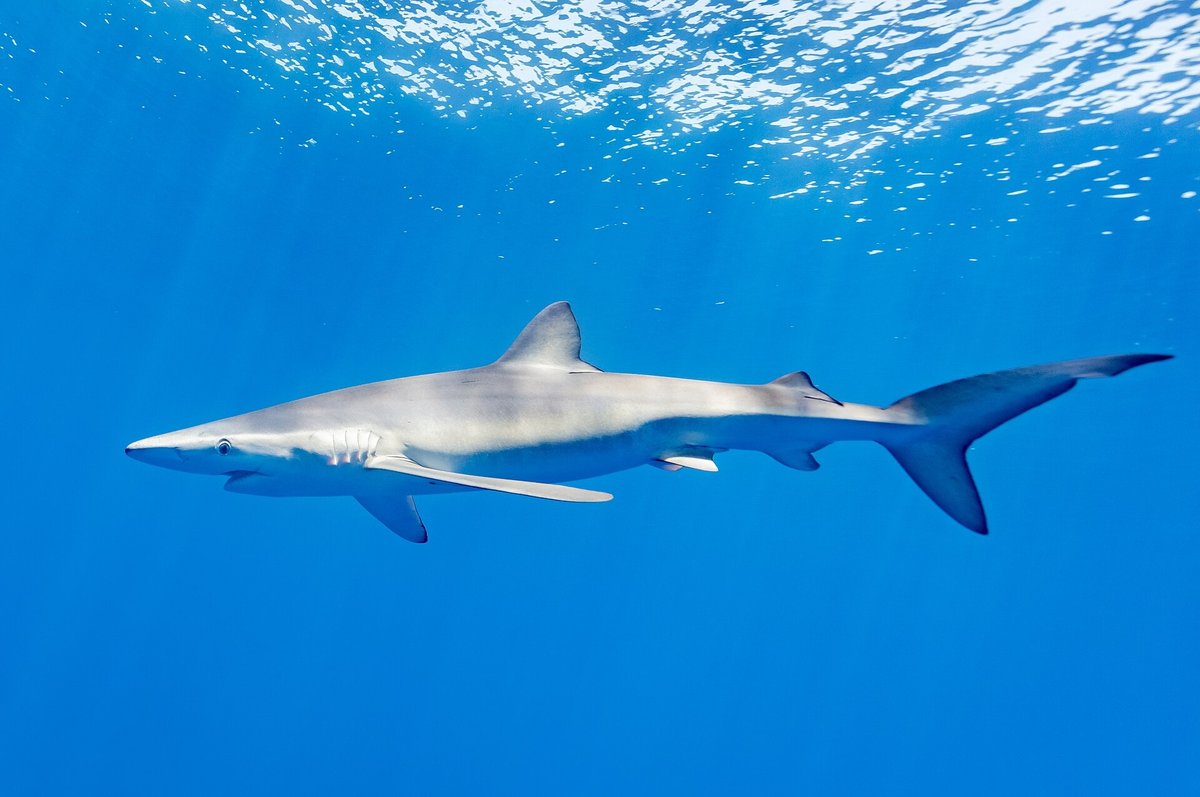
- Diet
- Feeds primarily on small forage fish and squid, with a varied diet that can include other invertebrates, larger fish, small sharks, carrion and occasional seabirds.
- Size
- Males: 1.82–2.82 m; Females: 2.2–3.3 m
- Range
- Worldwide in deep temperate and tropical oceans; found off every continent except Antarctica.
- Habitat
- An oceanic, epipelagic shark of deep temperate and tropical waters, ranging from the surface to about 350 m.
- Lifespan
- Believed to live up to 20 years; maximum lifespan remains unknown.
- Activity
- Highly migratory and most active at night, with increased movement and deeper dives reported after dark.
- Reproduction
- Viviparous, with a yolk-sac placenta; females give birth to 4 to 135 pups after a gestation period of 9 to 12 months. Young develop independently in nursery areas outside adult regions.
- Conservation
- Near Threatened by the IUCN.
- Camouflage
- A blue shark’s body is countershaded: deep blue above, lighter along the sides and white underneath. This pattern changes how it stands out against the ocean when viewed from different directions.
- Finding food
- Blue sharks can work together to herd prey into a concentrated group before feeding. Tuna have been observed taking advantage of fish that escape from the herd.
- Seasonal journeys
- They are long-distance travelers, moving across temperate and tropical waters and maintaining straight courses for hundreds of kilometres over many days in the northeastern United States.
- Sensing the world
- Blue sharks detect weak electrical fields with specialized receptors called the ampullae of Lorenzini. This sense helps them locate prey and may also assist with orientation.
- Raising the next generation
- Females give birth in nursery areas away from adult regions, where young sharks develop independently. Litters can contain 4 to 135 pups.
Facts
- A blue shark’s body is countershaded: deep blue above, lighter along the sides and white underneath. This pattern changes how it stands out against the ocean when viewed from different directions.
- Blue sharks can work together to herd prey into a concentrated group before feeding. Tuna have been observed taking advantage of fish that escape from the herd.
- They are long-distance travelers, moving across temperate and tropical waters and maintaining straight courses for hundreds of kilometres over many days in the northeastern United States.
- Blue sharks detect weak electrical fields with specialized receptors called the ampullae of Lorenzini. This sense helps them locate prey and may also assist with orientation.
- Females give birth in nursery areas away from adult regions, where young sharks develop independently. Litters can contain 4 to 135 pups.
Print and study the Blue Shark
This species is included in: