Lemon Shark
Negaprion brevirostris
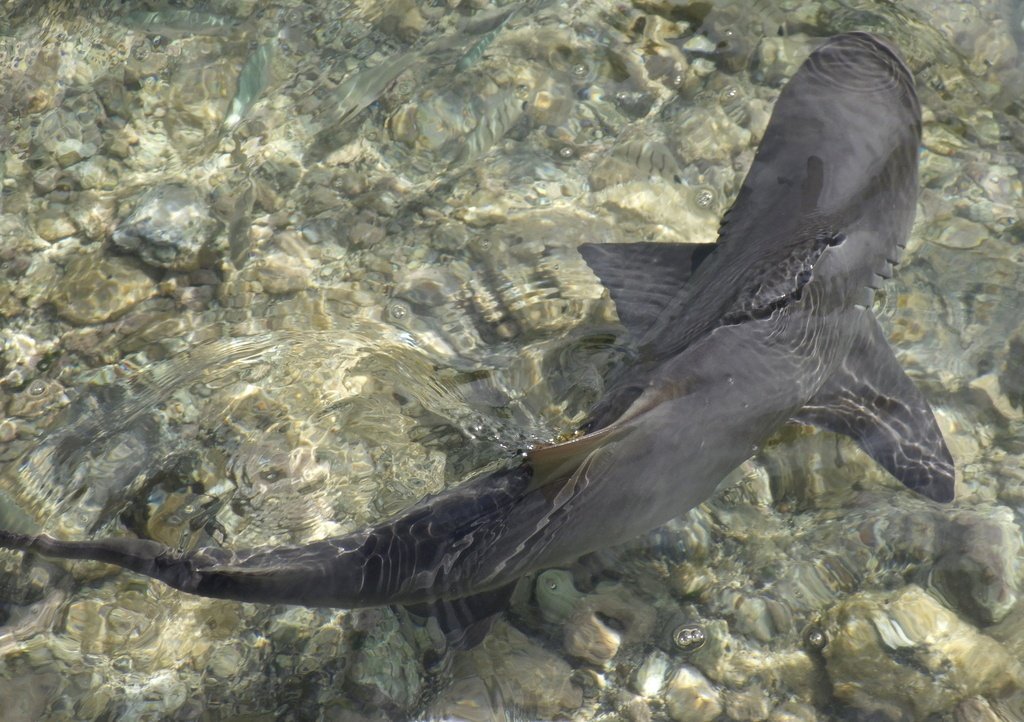
- Diet
- Feeds mainly on fish, especially at night; also takes crustaceans, benthic organisms, smaller sharks, stingrays, mollusks and birds.
- Size
- 2.4–3.1 m; Up to 90 kg
- Range
- Occurs in tropical and subtropical waters of the western Atlantic, southeastern Atlantic, eastern Pacific and around Cape Verde.
- Habitat
- Usually occupies warm, shallow coastal waters, including mangroves, coral reefs, enclosed bays and river mouths; it may also enter deeper open water and swim up rivers.
- Lifespan
- Unknown; the oldest recorded captive lemon shark died at 40 years.
- Activity
- Often feeds at night and uses electroreceptors to detect prey in darkness.
- Reproduction
- Viviparous: females give birth to live young in shallow nursery waters. Females are polyandrous and have a biennial reproductive cycle; young may remain in nursery areas for several years.
- Conservation
- Vulnerable; International Union for Conservation of Nature assessment, 2021.
- Camouflage
- Its yellowish skin blends with sandy seafloors, giving the shark camouflage in its coastal habitat.
- Sensing the world
- Special electrical sensors in the head, called ampullae of Lorenzini, detect the electrical pulses produced by potential prey. This helps the shark locate food in the dark.
- Life cycles
- Young lemon sharks repeatedly use shallow nursery areas, especially around mangroves, and may remain there for several years before moving into deeper water.
- Social lives
- Lemon sharks often form groups of similarly sized individuals. Groups can support communication, courtship, feeding behavior and protection, although they also bring competition and greater risk of disease transmission.
- Raising the next generation
- Females give birth to live young after transferring nutrients through a yolk-sac placenta. A litter of up to 18 pups has been recorded.
Facts
- Its yellowish skin blends with sandy seafloors, giving the shark camouflage in its coastal habitat.
- Special electrical sensors in the head, called ampullae of Lorenzini, detect the electrical pulses produced by potential prey. This helps the shark locate food in the dark.
- Young lemon sharks repeatedly use shallow nursery areas, especially around mangroves, and may remain there for several years before moving into deeper water.
- Lemon sharks often form groups of similarly sized individuals. Groups can support communication, courtship, feeding behavior and protection, although they also bring competition and greater risk of disease transmission.
- Females give birth to live young after transferring nutrients through a yolk-sac placenta. A litter of up to 18 pups has been recorded.
Print and study the Lemon Shark
This species is included in: