Shortfin Mako
Isurus oxyrinchus
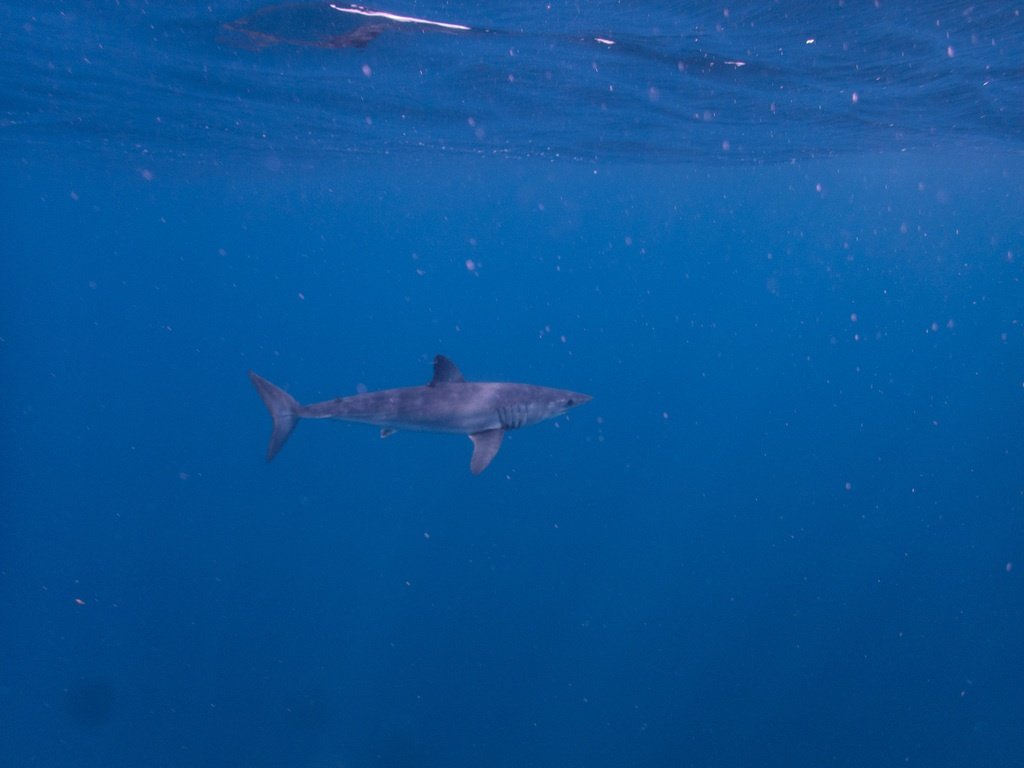
- Diet
- Primarily squid, other cephalopods and bony fish; it may also take sharks, marine mammals, sea turtles, seabirds and crustaceans.
- Size
- 2.5–3.2 m
- Range
- A cosmopolitan pelagic shark of temperate and tropical seas worldwide, usually offshore.
- Habitat
- Usually far from land, from the surface to depths of 150 m; it may sometimes approach shores, islands and inlets.
- Lifespan
- Validated maximum ages were 29 years in males and 32 years in females.
- Activity
- Highly active and athletic; it travels long distances in search of prey or mates and can leap high when hooked.
- Reproduction
- A yolk-sac ovoviviparous shark: embryos develop inside the uterus and feed on unfertilized eggs. Females give birth to about four to 18 live young after a 15–18 month gestation.
- Conservation
- Endangered on the IUCN Red List; also included in CITES Appendix II.
- Getting around
- The shortfin mako is described as the fastest known shark. It can reach 74 km/h in bursts, helping explain its reputation for explosive pursuit and dramatic leaps when hooked.
- Camouflage
- Its metallic-blue back and white underside create countershading: from above it blends with darker water, while from below its pale underside is less conspicuous against the brighter surface.
- Finding food
- When hunting, the mako often swims below its prey and then lunges upward, giving it a chance to reach the target before the target notices the attack.
- Life cycles
- Young makos are born at about 70 cm long, but a female may then rest for 18 months before mating again. On average, females produce young only once every three years.
- Conservation stories
- The species was reclassified by the IUCN from Vulnerable to Endangered in 2019. It is also listed in CITES Appendix II, which regulates international trade.
Facts
- The shortfin mako is described as the fastest known shark. It can reach 74 km/h in bursts, helping explain its reputation for explosive pursuit and dramatic leaps when hooked.
- Its metallic-blue back and white underside create countershading: from above it blends with darker water, while from below its pale underside is less conspicuous against the brighter surface.
- When hunting, the mako often swims below its prey and then lunges upward, giving it a chance to reach the target before the target notices the attack.
- Young makos are born at about 70 cm long, but a female may then rest for 18 months before mating again. On average, females produce young only once every three years.
- The species was reclassified by the IUCN from Vulnerable to Endangered in 2019. It is also listed in CITES Appendix II, which regulates international trade.
Print and study the Shortfin Mako
This species is included in: