Atlantic Stingray
Hypanus sabinus
- Diet
- Feeds mostly on benthic invertebrates, including bivalves, tube anemones, amphipods, crustaceans and nereid worms.
- Size
- Up to 61 cm; Up to 4.9 kg
- Range
- Western Atlantic: from the Chesapeake Bay southward along the Atlantic coast to Florida, the Gulf of Mexico and Campeche, Mexico.
- Habitat
- Shallow coastal waters over sandy or silty bottoms, estuaries, lakes and brackish or freshwater habitats.
- Activity
- Makes seasonal migrations to remain in warmer water. It is present in the northerly Chesapeake Bay during summer and fall, then moves to deeper water in winter.
- Reproduction
- Viviparous. Courtship includes the male following and biting the female and gripping her pectoral fin. Embryos are nourished first by a yolk sac and later by uterine milk; litters contain 1–4 young after a 4–4.5-month gestation.
- Conservation
- Least Concern; assessed by the World Conservation Union in 2020.
- What to notice
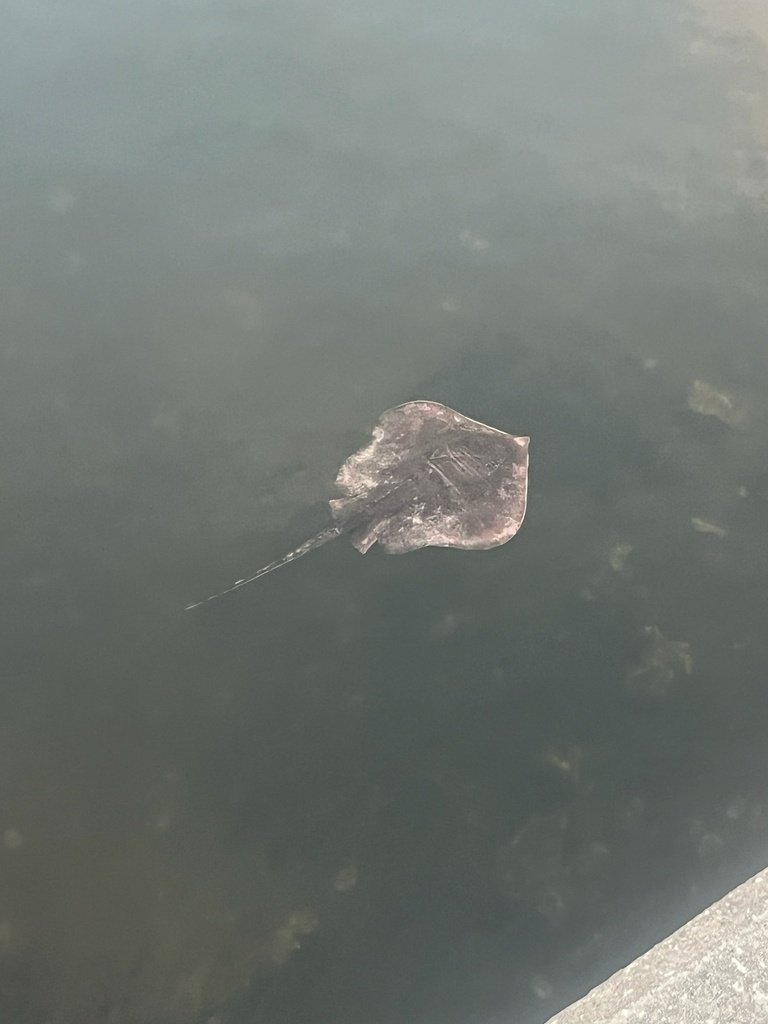
- Its relatively elongated snout helps distinguish it from other stingrays in the same region.
- Finding food
- When feeding, it faces into the current so sediment is carried away. Electroreceptive organs called ampullae of Lorenzini help it locate prey hidden in the bottom.
- Remarkable adaptations
- This ray can live in freshwater without the specialized osmoregulatory mechanisms found in river stingrays. Freshwater individuals produce very dilute urine to offset water entering their bodies.
- Raising the next generation
- During reproduction, embryos begin by using a yolk sac and later receive uterine milk, a nourishing secretion from the mother.
- Defenses
- The tail spine is replaced annually between June and October. Larger individuals may also develop tubercles, or thorn-like structures, along the back.
Facts
- Its relatively elongated snout helps distinguish it from other stingrays in the same region.
- When feeding, it faces into the current so sediment is carried away. Electroreceptive organs called ampullae of Lorenzini help it locate prey hidden in the bottom.
- This ray can live in freshwater without the specialized osmoregulatory mechanisms found in river stingrays. Freshwater individuals produce very dilute urine to offset water entering their bodies.
- During reproduction, embryos begin by using a yolk sac and later receive uterine milk, a nourishing secretion from the mother.
- The tail spine is replaced annually between June and October. Larger individuals may also develop tubercles, or thorn-like structures, along the back.
Print and study the Atlantic Stingray
This species is included in: