Sand Tiger Shark
Carcharias taurus
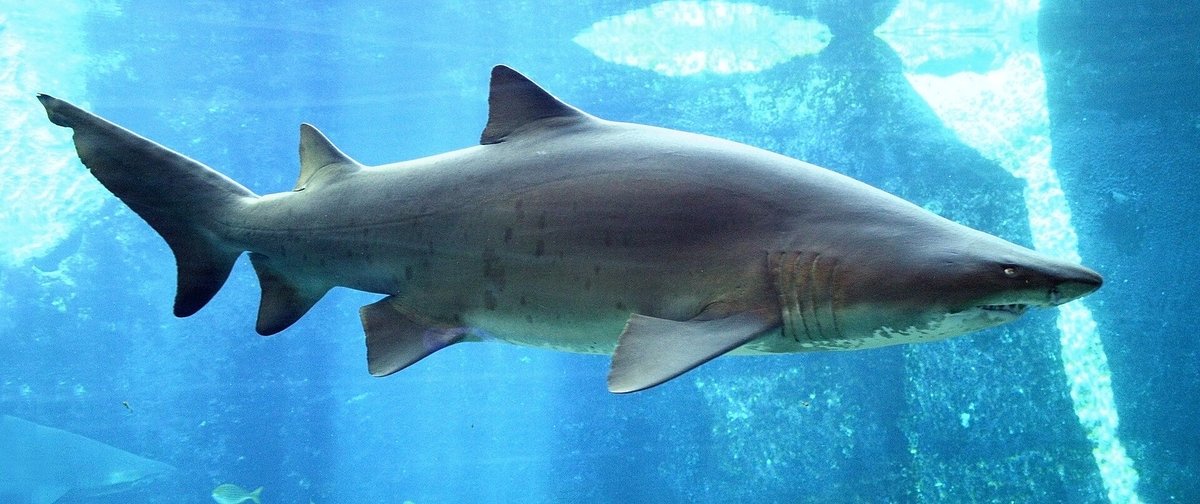
- Diet
- Feeds mainly on bony fish, with sharks, skates, rays, lobsters, crabs and squid also recorded.
- Size
- 2.2–2.5 m
- Range
- Subtropical and temperate waters worldwide, including the Atlantic, Pacific and Indian Oceans; it is presumed extirpated from the Mediterranean, where it was last seen in 2003.
- Habitat
- Uses coastal and continental-shelf habitats from sandy shorelines and estuaries to submerged reefs, rocky reefs, caves and shallow bays; recorded to about 191 m.
- Activity
- Nocturnal feeder. During the day it often shelters near rocks, overhangs, caves and reefs; at night it hunts over the sea floor.
- Reproduction
- Females usually give birth to two fully independent young after an approximately eight- to twelve-month gestation. During development, the largest embryo in each uterine horn consumes its smaller siblings, a process called intrauterine cannibalism or embryophagy.
- Conservation
- Critically Endangered on the IUCN Red List (2021); also listed as endangered under Queensland's Nature Conservation Act 1992 and as a U.S. National Marine Fisheries Service Species of Concern.
- Remarkable adaptations
- A sand tiger can gulp air at the surface and hold it in its stomach. This gives it near-neutral buoyancy, helping it hover almost motionlessly and quietly while hunting.
- Finding food
- It usually hunts after dark. By day, sand tigers may rest above the bottom near caves, rocks or reefs; at night they leave shelter and range over the sea floor.
- Life cycles
- Before birth, competition among siblings becomes extreme: the largest embryo in each uterine horn eats the smaller embryos, leaving one surviving embryo in each horn.
- Seasonal journeys
- Sand tigers in South Africa and Australia undertake annual migrations that can exceed 1,000 km; a complete seasonal journey may reach about 3,000 km.
- Social lives
- Groups called shivers have been observed hunting large schools of fish. Their usual open-mouthed swimming posture displays several rows of long, protruding teeth.
Facts
- A sand tiger can gulp air at the surface and hold it in its stomach. This gives it near-neutral buoyancy, helping it hover almost motionlessly and quietly while hunting.
- It usually hunts after dark. By day, sand tigers may rest above the bottom near caves, rocks or reefs; at night they leave shelter and range over the sea floor.
- Before birth, competition among siblings becomes extreme: the largest embryo in each uterine horn eats the smaller embryos, leaving one surviving embryo in each horn.
- Sand tigers in South Africa and Australia undertake annual migrations that can exceed 1,000 km; a complete seasonal journey may reach about 3,000 km.
- Groups called shivers have been observed hunting large schools of fish. Their usual open-mouthed swimming posture displays several rows of long, protruding teeth.
Print and study the Sand Tiger Shark
This species is included in: