Oceanic Whitetip Shark
Carcharhinus longimanus
- Diet
- Mainly pelagic cephalopods and bony fish, with a broad opportunistic diet that can include rays, sea turtles, seabirds, crustaceans and marine mammal carcasses.
- Size
- Up to 3 m; Up to 150 kg
- Range
- Worldwide in tropical and warm temperate seas, between approximately 45°N and 43°S.
- Habitat
- A pelagic, open-ocean shark that usually stays in the upper 150 m, especially in offshore deep water.
- Lifespan
- Maximum longevity recorded: 22 years in the wild.
- Activity
- Typically solitary and active during both day and night. It usually cruises slowly near the ocean surface, but may swim faster and deeper when surface waters are warmer.
- Reproduction
- Viviparous: embryos develop inside the uterus and are nourished by a placental sac. Gestation lasts about nine months to one year, and females give birth to live young.
- Conservation
- Critically Endangered on the IUCN Red List (2019 assessment).
- What to notice
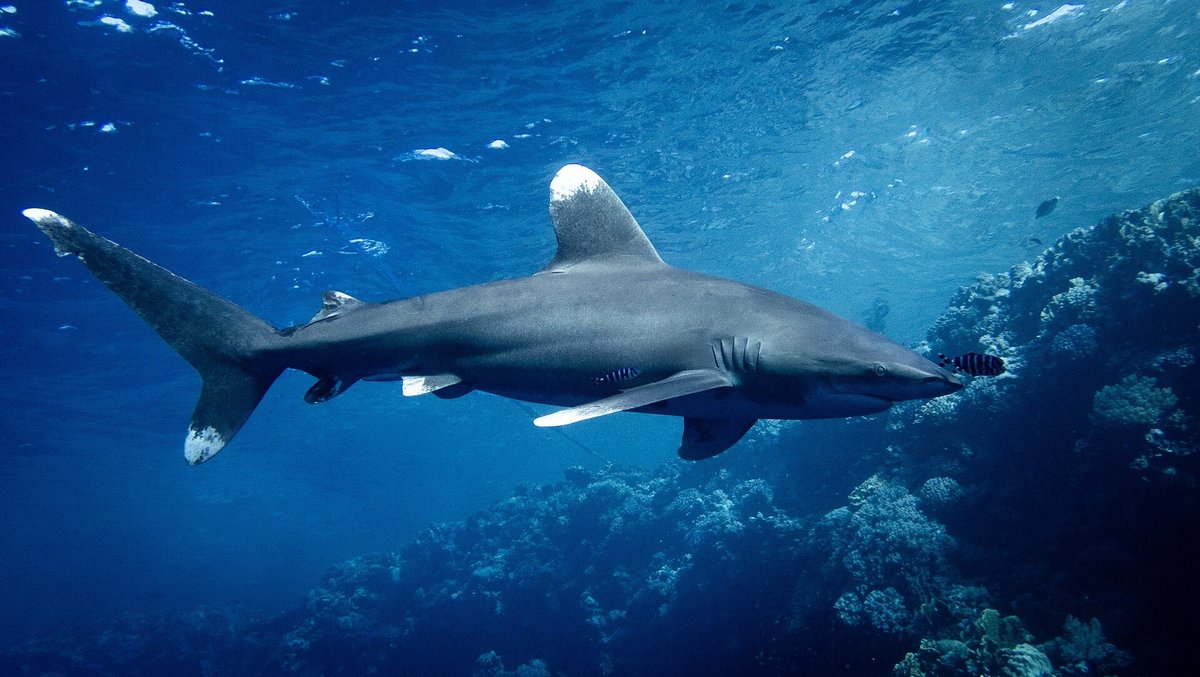
- Its long, rounded pectoral and dorsal fins are the easiest field marks to notice. Most fins also carry conspicuous white tips, while the back is grey-bronze and the underside is white.
- Social lives
- Although it often travels alone, oceanic whitetips may gather in large numbers when food is concentrated. These gatherings can include feeding frenzies.
- Finding food
- Squid and bony fish are the main foods, but this shark is not a narrow specialist: records also include seabirds, sea turtles, rays, crustaceans and floating marine-mammal carcasses.
- Getting around
- Oceanic whitetips cruise slowly near the surface, yet they can change their swimming pattern with conditions. In summer, when the surface is warmer, they tend to swim faster and at greater depth.
- Life cycles
- The species gives birth to live young rather than laying eggs. Newborns are reported at different lengths in different regions, including 45–55 cm in the Pacific and 65–75 cm in the northwest Atlantic.
Facts
- Its long, rounded pectoral and dorsal fins are the easiest field marks to notice. Most fins also carry conspicuous white tips, while the back is grey-bronze and the underside is white.
- Although it often travels alone, oceanic whitetips may gather in large numbers when food is concentrated. These gatherings can include feeding frenzies.
- Squid and bony fish are the main foods, but this shark is not a narrow specialist: records also include seabirds, sea turtles, rays, crustaceans and floating marine-mammal carcasses.
- Oceanic whitetips cruise slowly near the surface, yet they can change their swimming pattern with conditions. In summer, when the surface is warmer, they tend to swim faster and at greater depth.
- The species gives birth to live young rather than laying eggs. Newborns are reported at different lengths in different regions, including 45–55 cm in the Pacific and 65–75 cm in the northwest Atlantic.
Print and study the Oceanic Whitetip Shark
This species is included in: