Bull Shark
Carcharhinus leucas
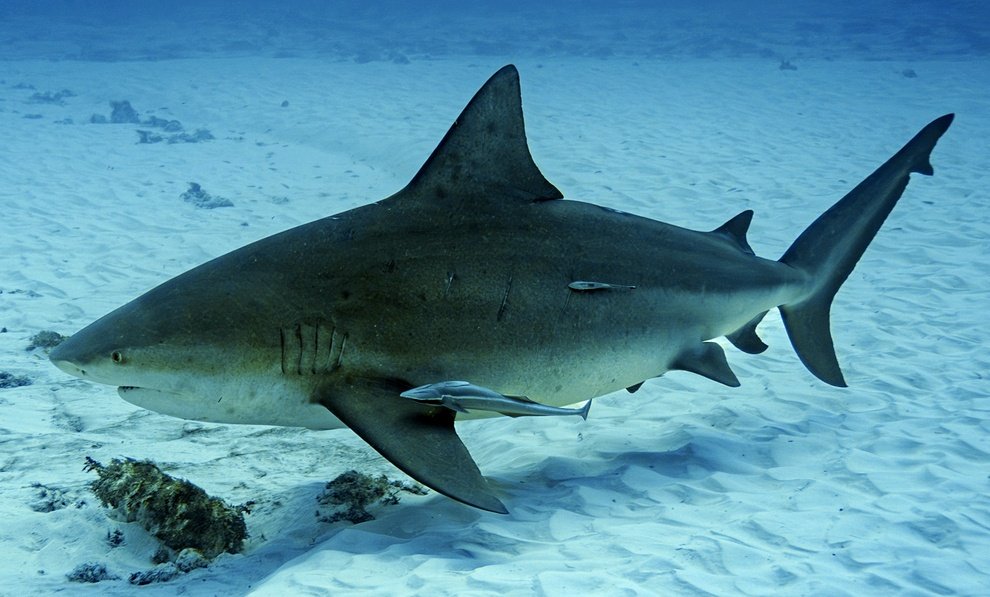
- Diet
- An opportunistic predator that mainly eats bony fish, small sharks and stingrays, but also takes turtles, birds, dolphins, terrestrial mammals, crustaceans and echinoderms.
- Size
- Females: 2.4 m average; Males: 2.25 m average; Up to 3.5 m commonly reported; Single record: 4 m
- Range
- Found worldwide in warm coastal waters, rivers and lakes, including brackish and freshwater systems.
- Habitat
- Warm, shallow coastal waters, estuaries, river mouths, rivers and lakes; it can occur in both salt and fresh water.
- Lifespan
- 30 years
- Activity
- Usually a solitary hunter. Young bull sharks may move downriver with changing tidal flow, apparently reducing the energy needed for movement.
- Reproduction
- Mating occurs in late summer and early autumn, often in bays and estuaries. After a 12-month gestation, females give birth to 1–13 live, free-swimming young in protected low-salinity habitats such as coastal lagoons, river mouths and estuaries.
- Conservation
- Vulnerable on the IUCN Red List; assessment cited in the supplied material is from 2021.
- Seasonal journeys
- Bull sharks can move between salt and fresh water. Tagged sharks have traveled between Lake Nicaragua and the open ocean, with some completing the journey in 7–11 days.
- Life cycles
- Newborns and very young bull sharks are commonly found in freshwater or low-salinity nursery areas, then move toward more saline water as they mature and tolerate a wider range of salinities.
- Finding food
- When hunting in murky water, a bull shark may bump prey first and then continue biting and tackling it until it cannot escape.
- Getting around
- Young bull sharks in an estuary have been observed moving downriver in synchrony when tidal conditions changed, using the flow to reduce the energy cost of swimming.
- Remarkable adaptations
- A bull shark can live in low-salinity water for long periods: several individuals occupied a stagnant golf-course lake in Brisbane from 1996 to 2013.
Facts
- Bull sharks can move between salt and fresh water. Tagged sharks have traveled between Lake Nicaragua and the open ocean, with some completing the journey in 7–11 days.
- Newborns and very young bull sharks are commonly found in freshwater or low-salinity nursery areas, then move toward more saline water as they mature and tolerate a wider range of salinities.
- When hunting in murky water, a bull shark may bump prey first and then continue biting and tackling it until it cannot escape.
- Young bull sharks in an estuary have been observed moving downriver in synchrony when tidal conditions changed, using the flow to reduce the energy cost of swimming.
- A bull shark can live in low-salinity water for long periods: several individuals occupied a stagnant golf-course lake in Brisbane from 1996 to 2013.
Print and study the Bull Shark
This species is included in: