Great White Shark
Carcharodon carcharias
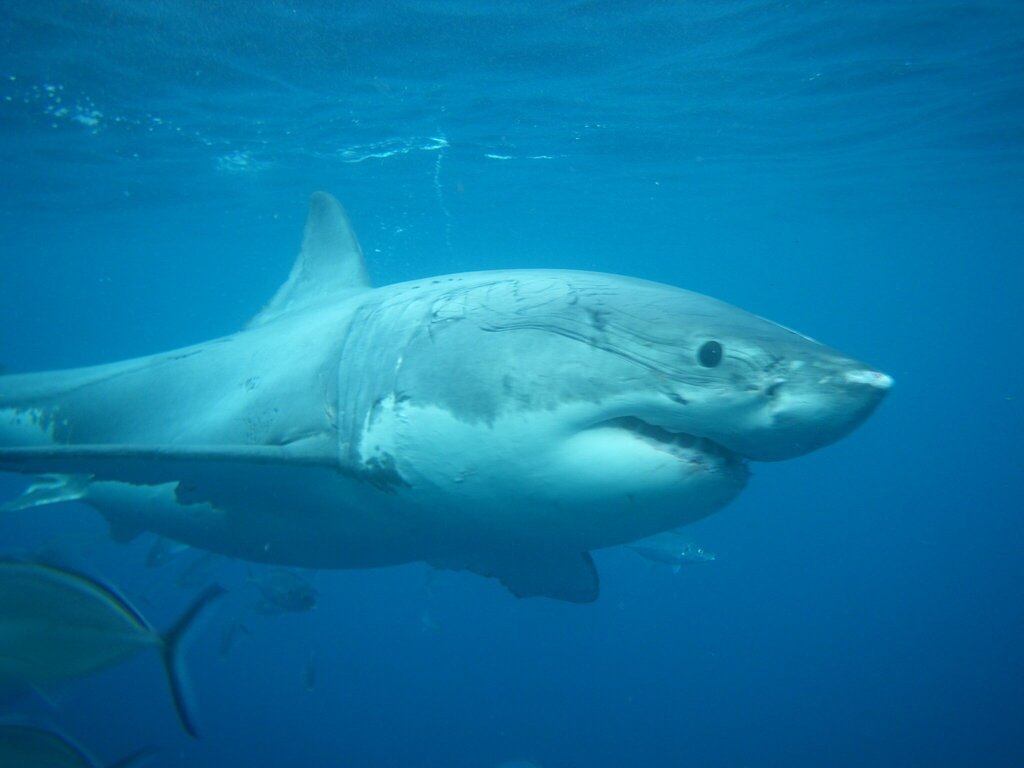
- Diet
- An opportunistic predator that eats fish, squid and other cephalopods, marine mammals, seabirds, sea turtles, and sometimes other sharks; it also scavenges whale carcasses.
- Size
- Up to 6.4 m
- Range
- Tropical to temperate and some colder ocean waters worldwide, both near coasts and in the open ocean.
- Habitat
- Uses coastal and offshore marine habitats, including nearshore archipelagos, reefs, banks, shoals, headlands, and open ocean.
- Lifespan
- Estimated 30–70+ years; maximum age remains uncertain.
- Activity
- Highly migratory. Usually solitary, but may gather in aggregations, especially at feeding sites; it must swim continuously to move water across its gills.
- Reproduction
- Pups hatch from eggs inside the female and are then born live. Juveniles generally occupy shallower water and feed on smaller prey.
- Conservation
- Vulnerable globally; critically endangered regionally in European and Mediterranean waters.
- Finding food
- About 300 triangular, serrated teeth sit in conveyor-belt-like rows. Teeth at the back move forward to replace those lost at the front.
- Camouflage
- Its dark upper surface and white underside create countershading camouflage, making the shark harder to see from above or below.
- Remarkable adaptations
- A system of blood vessels helps keep parts of its body warmer than the surrounding water. This regional warm-bloodedness allows the shark to remain active in cool seas.
- Seasonal journeys
- White sharks undertake ocean-spanning migrations in response to food and temperature. One tracked shark traveled from South Africa to Australia and back in under nine months, covering 20,000 km.
- Finding food
- When hunting seals, a white shark often attacks from below near the surface. In South Africa, some attacks send the shark breaching partly or completely out of the water.
Facts
- About 300 triangular, serrated teeth sit in conveyor-belt-like rows. Teeth at the back move forward to replace those lost at the front.
- Its dark upper surface and white underside create countershading camouflage, making the shark harder to see from above or below.
- A system of blood vessels helps keep parts of its body warmer than the surrounding water. This regional warm-bloodedness allows the shark to remain active in cool seas.
- White sharks undertake ocean-spanning migrations in response to food and temperature. One tracked shark traveled from South Africa to Australia and back in under nine months, covering 20,000 km.
- When hunting seals, a white shark often attacks from below near the surface. In South Africa, some attacks send the shark breaching partly or completely out of the water.
Print and study the Great White Shark
This species is included in: