Shingleback
Tiliqua rugosa
- Habitat
- Shrubland, Eucalyptus forest, Desert grassland, Sandy dunes, Dry, open environments
- Diet
- Omnivorous, but predominantly herbivorous; eats plant material as well as snails, beetles and other small animal foods.
Facts
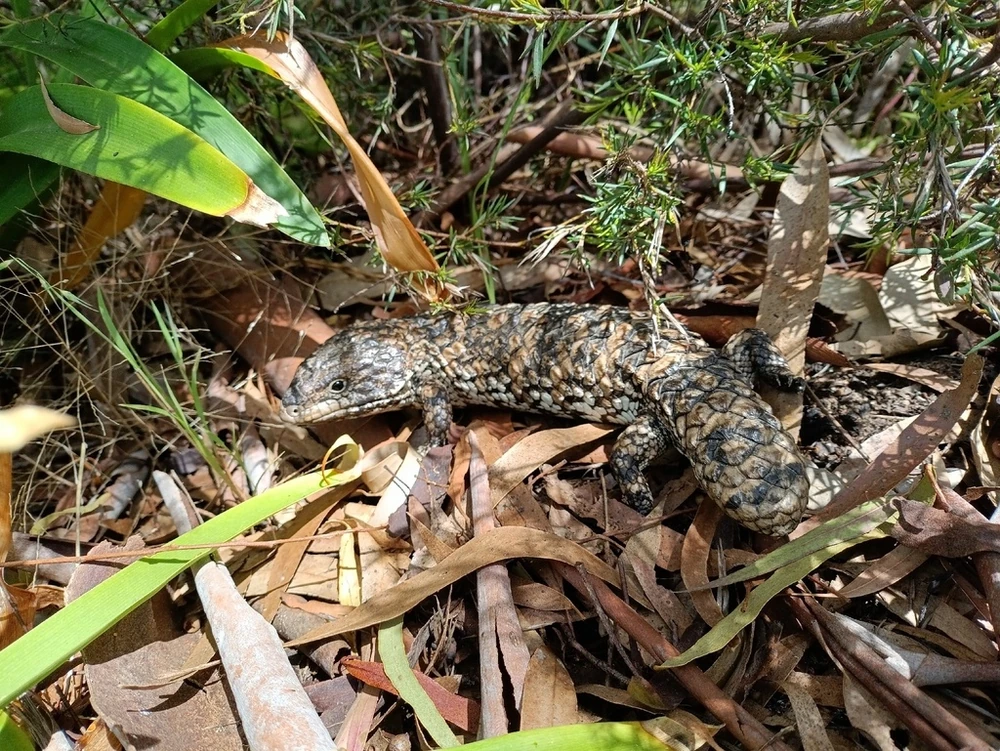
- Its large, rough scales, oversized head and short blunt tail give it a distinctive shingle-like appearance. The dark-blue tongue contrasts with the pink mouth, while the body is commonly brown to black with irregular pale bands.
- Although it is classified as omnivorous, plant material makes up most of its diet. It also takes slow-moving prey such as snails and beetles.
- A morning shingleback may be seen basking before it begins foraging in the warmer part of the day. During cold weather, it can remain inactive in a shelter for extended periods.
- Shinglebacks give birth to live young rather than laying eggs. A typical litter contains two or three young, with births occurring from December to April after the spring mating period.
Print and study the Shingleback
This species is included in: