Explore 40 remarkable lizard species. Photographs, approved research notes, and sources.
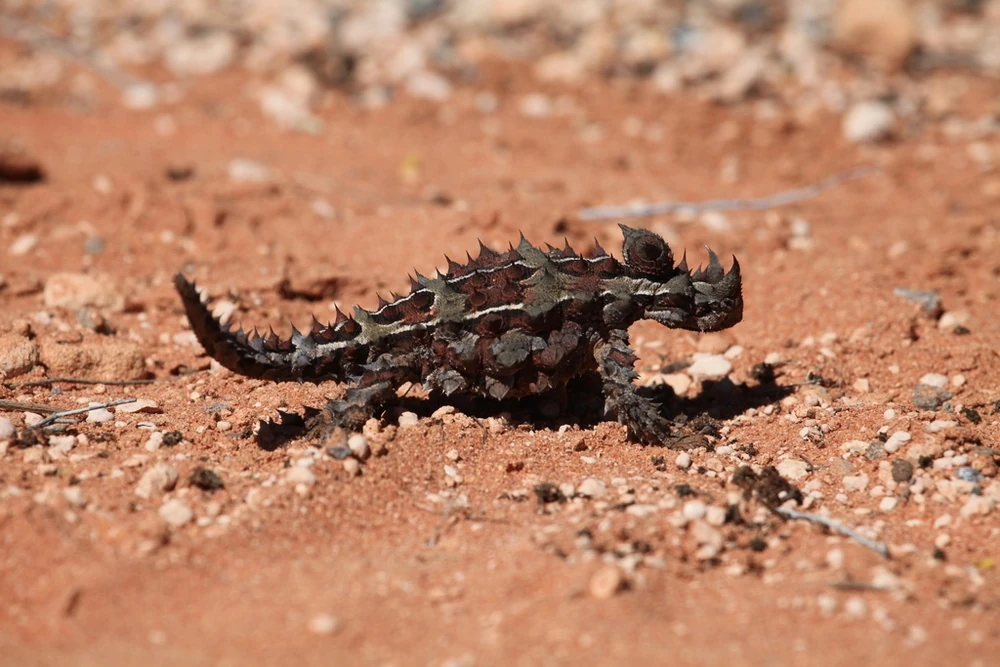
Thorny Devil
Moloch horridus
Moloch horridus · observation 398422130 · bitsandbugs · CC0
Habitat: Terrestrial; associated with desert and shrubland habitat.
Diet: Carnivorous; insects, mostly ants, are recorded as the principal food.
Facts and sources
- Ants dominate the recorded diet. The species is listed as carnivorous and feeds on insects, mostly ants.
- This is a ground-dwelling lizard of desert and shrubland habitats, with activity recorded during the day.
- Females lay eggs rather than giving birth to live young. The recorded clutch size is 3–10 eggs, with one clutch produced per year.
- The supplied assessment lists the species as Least Concern and records its population trend as Stable.
Research sources
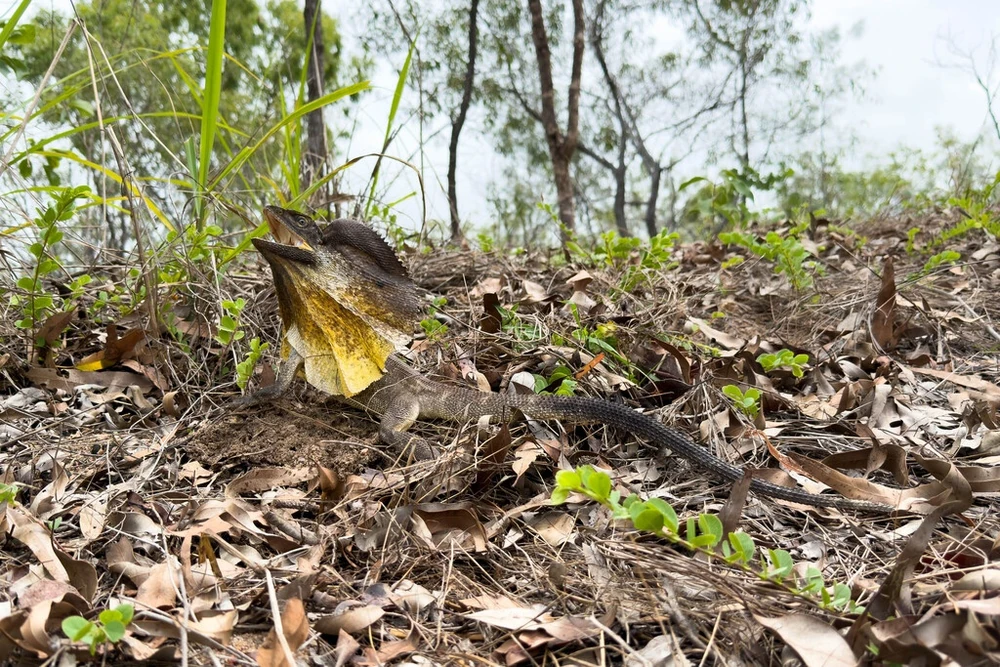
Frilled Lizard
Chlamydosaurus kingii
Chlamydosaurus kingii · observation 332576921 · Jun MATSUI · CC0
Range: Occurs across northern Australia and southern New Guinea.
Habitat: Subhumid to semi-arid grassy woodlands and dry sclerophyll forests; strongly arboreal and commonly found on tree trunks and limbs.
Diet: Primarily insectivorous, eating mainly small invertebrates; small mammals and meat have also been reported.
Facts and sources
- The neck frill can spring open during a threat display, making this otherwise grey-brown lizard immediately conspicuous.
- When disturbed, it may run upright on its hind legs and escape into the trees.
- Although often noticed for its dramatic frill, it is strongly arboreal: tree trunks and limbs are regular places to perch and move.
- Its breeding season is linked to the wet season, and a clutch may contain about 4–13 eggs that incubate for approximately 70 days.
- Useful field marks include long limbs, a moderately long tail, and a conspicuous neck frill; the mouth and tongue may be pink or yellow.
Research sources
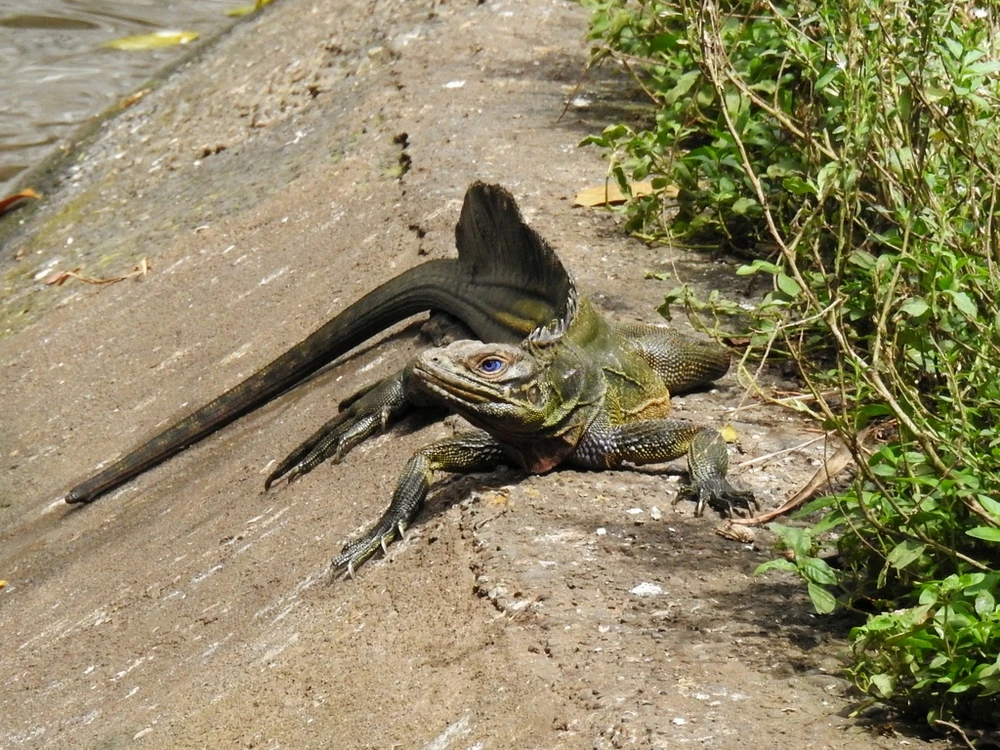
Philippine sailfin lizard
Hydrosaurus pustulatus
Hydrosaurus pustulatus · observation 338300907 · Kseniia Marianna Prondzynska · CC BY
Habitat: Semiaquatic lizard of forested wetlands, lowland waterways, riparian corridors, coastal forests and mangroves; it can also occur near cultivated areas.
Diet: Leaves, Flowers, Shoots, Insects
Facts and sources
- It is closely associated with water: records place it along rivers and other waterways, including riparian corridors, mangroves and coastal forest. It may also turn up where these habitats meet cultivated land.
- Daylight is its main observed activity period. At night, field researchers found individuals resting in sheltered sleeping sites such as rock crevices.
- Females lay eggs in clutches reported from 3 to 12, with a mean of 7.5 eggs; the supplied dataset reports 3.5 clutches per year.
Research sources
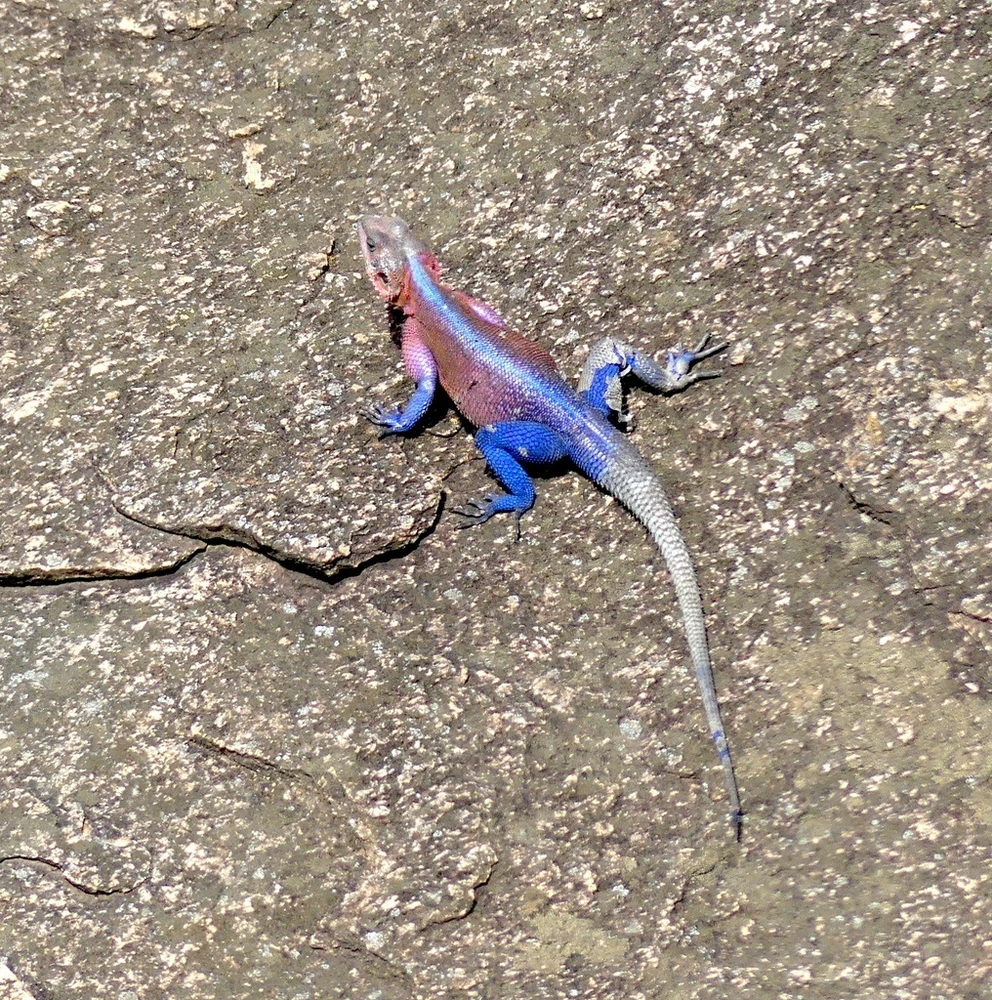
Mwanza flat-headed rock agama
Agama mwanzae
Agama mwanzae · observation 348015263 · bukoba_steve · CC BY
Habitat: Associated with exposed rocky habitats, including rock outcrops, kopjes and boulder fields; shelters in crevices and beneath peeling granite surfaces.
Diet: Insects and other arthropods, Ants, Grasshoppers, Flies, Bees, Plant material, including flowers and fruit
Facts and sources
- Breeding males develop bright reddish-pink heads, necks and trunks with blue limbs and tails, while females and juveniles are more cryptically olive, dark purple-grey or brownish and may show a pale dorsal streak.
- Although it eats a broad range of small foods, field observations recorded ants as its main food, alongside grasshoppers, flies, a bee and some plant material.
- This rock-dwelling agama uses crevices between large boulders and spaces beneath peeling granite as shelters.
- Females lay clutches of 7–8 eggs; the recorded average clutch size is 7.5 eggs.
Research sources
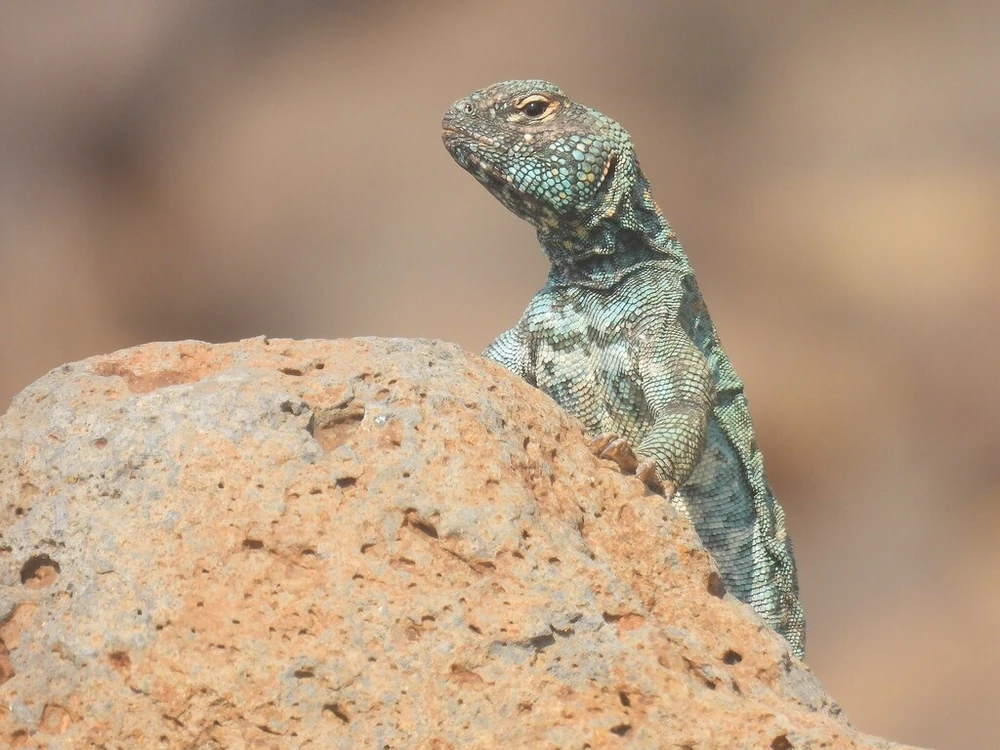
Ornate spiny-tailed lizard
Uromastyx ornata
Uromastyx ornata · observation 336116601 · Marius Burger · CC0
Habitat: Arid environments, Hyper-arid environments, Rocky wadis and slopes, Gravelly or stony ground, Sparse acacia or shrubland, Rock crevices
Diet: Plants, Some insects, Arthropods, especially for young individuals
Facts and sources
- Males may show green, blue, or red coloration with yellow or reddish-brown markings, while females are generally paler brown with darker spots.
- Its diet changes with age: the species is mainly plant-eating, but young individuals feed on arthropods and the species also takes some insects.
- A typical reproductive record is one clutch per year; clutch size varies from 3 to 19 eggs, with a mean of 9.
Research sources
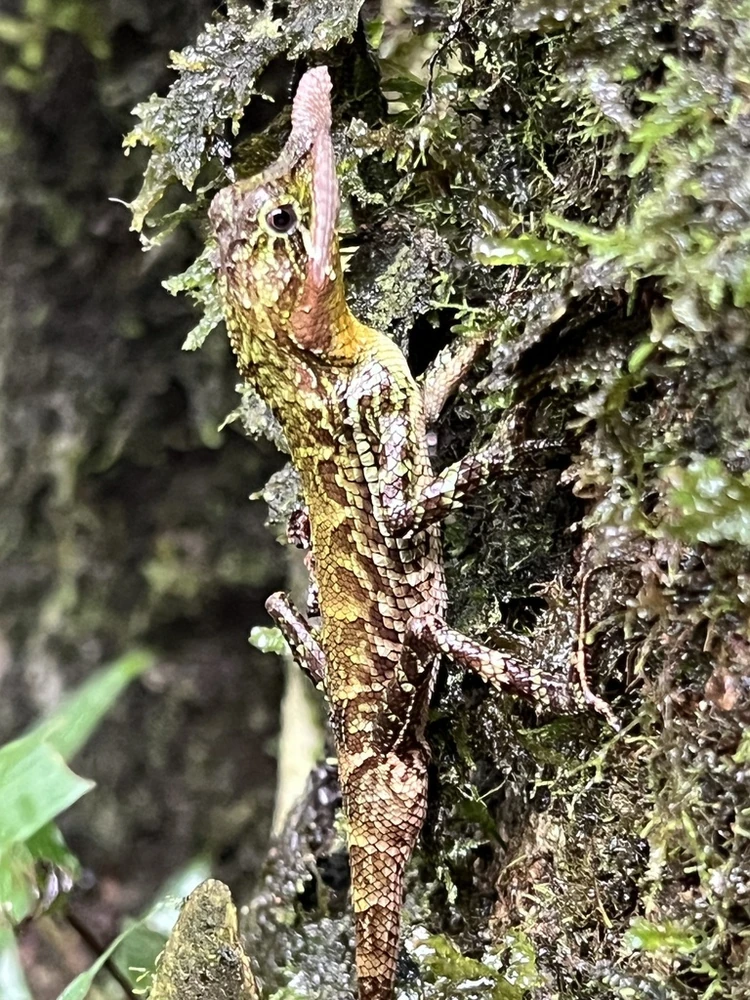
Leaf-nosed lizard
Ceratophora tennentii
Ceratophora tennentii · observation 260957808 · Sharon Reid · CC BY
Range: Sri Lanka, Knuckles Range, central Sri Lanka
Habitat: Forest habitats, using both arboreal and terrestrial microhabitats.
Diet: A carnivore that takes insects, caterpillars, earthworms and other small terrestrial invertebrates; reported feeding also includes arthropods and insects.
Facts and sources
- This lizard is a sit-and-wait predator: it remains still until insects, caterpillars, earthworms or other small invertebrates come within reach.
- During the day it may bask in patches of dappled sunlight and forage from low branches, matching its mainly arboreal way of life.
Research sources
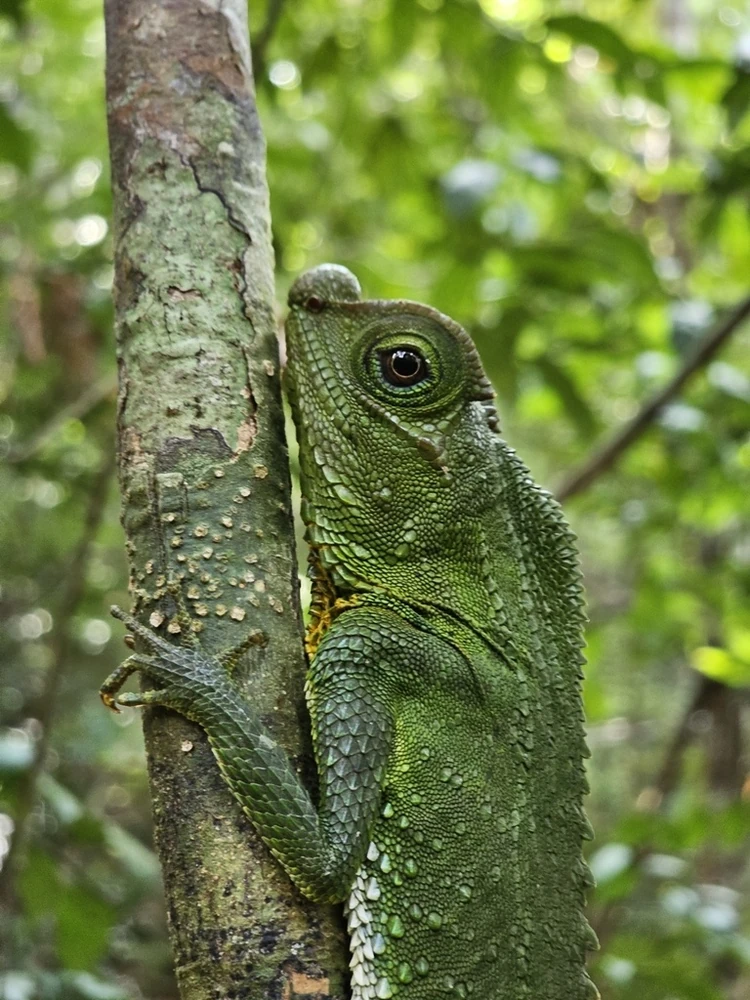
Hump-nosed lizard
Lyriocephalus scutatus
Lyriocephalus scutatus · observation 351668495 · Tim · CC BY
Range: Sri Lanka
Habitat: Forest, Arboreal
Diet: Arthropods, Earthworms, Fruits, Shoots and buds
Facts and sources
- This species lives in trees in forest habitat, so its arboreal lifestyle is an important clue when searching for it in Sri Lanka.
- The species lays eggs, and recorded clutches vary from just 1 egg to 16 eggs.
- It is found only in Sri Lanka, mainly in the southwest, with a reported range of less than approximately 17,000 km².
Research sources
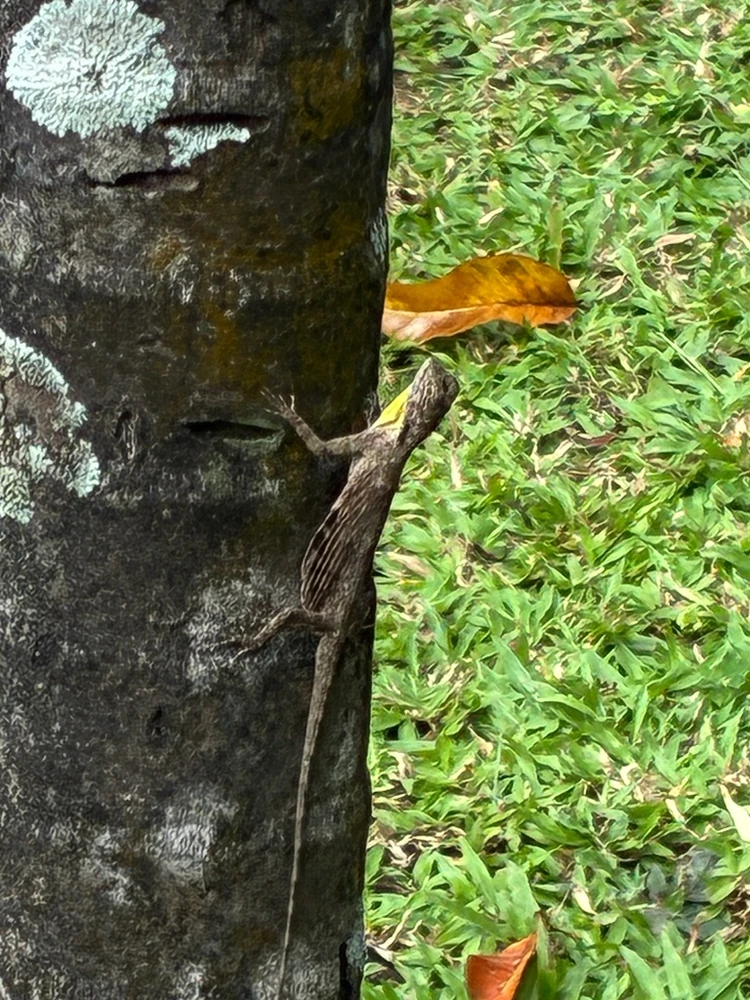
Common Flying Dragon
Draco volans
Draco volans · observation 396777724 · Lucia Rose · CC BY
Habitat: Arboreal and associated with forests.
Diet: ants, termites, insects, possibly other arthropods
Facts and sources
- Look for rectangular brown spots across the upper surfaces of the wing membranes and black spots beneath them; this pattern helps distinguish it from other Draco species.
- This lizard is active by day, especially from about 08:00 to 11:00, then again from after 13:00 into the afternoon.
- Females lay eggs in clutches ranging from 1 to 7, with an average clutch size of 4.5 eggs.
Research sources
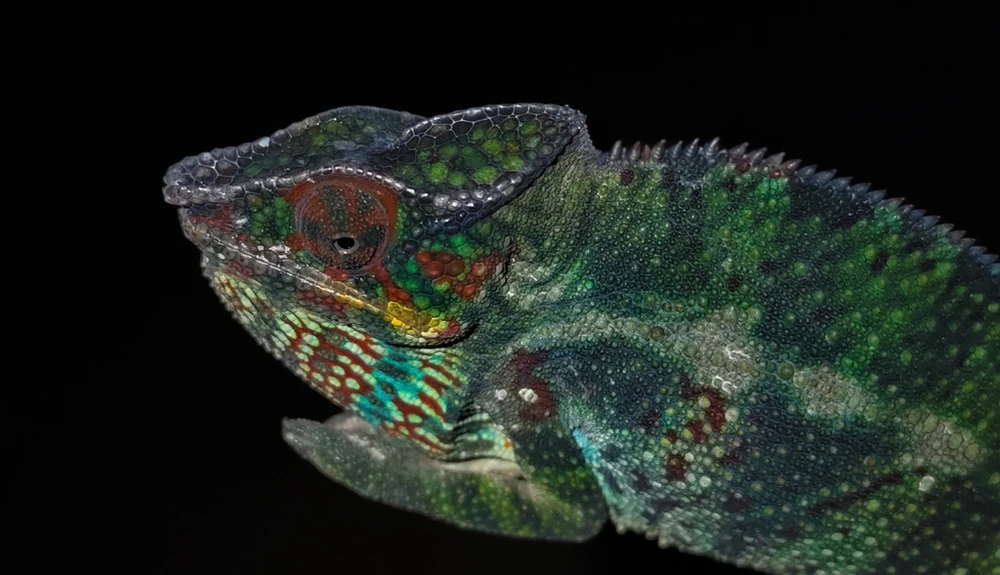
Panther Chameleon
Furcifer pardalis
Furcifer pardalis · observation 373052042 · Jenni Ly · CC BY
Range: Native to Madagascar, especially its northern, northeastern, eastern, and northwestern regions; introduced to La Réunion, while occurrence on Mauritius is disputed.
Habitat: Primarily arboreal in lowland dry deciduous and other relatively open forests, including vegetation along rivers and roads; also associated with riparian and coastal settings.
Diet: Primarily an insectivore and opportunistic predator, taking mainly terrestrial invertebrates and only rarely plant material; ReptTraits classifies the species as omnivorous.
Facts and sources
- Males are typically larger and more vividly colored than females. The species has a shorter casque than the veiled chameleon, with ridges extending over the eyes and snout into a shovel-like projection.
- During daylight, individuals spend their active hours in vegetation. They are generally solitary and territorial rather than living in groups.
- Females bury their eggs in ground nests, linking this tree-dwelling species to the forest floor during reproduction.
- Its diet is centered on terrestrial invertebrates, although plant material is taken occasionally. This contrasts with the broader “omnivorous” classification recorded by ReptTraits.
Research sources
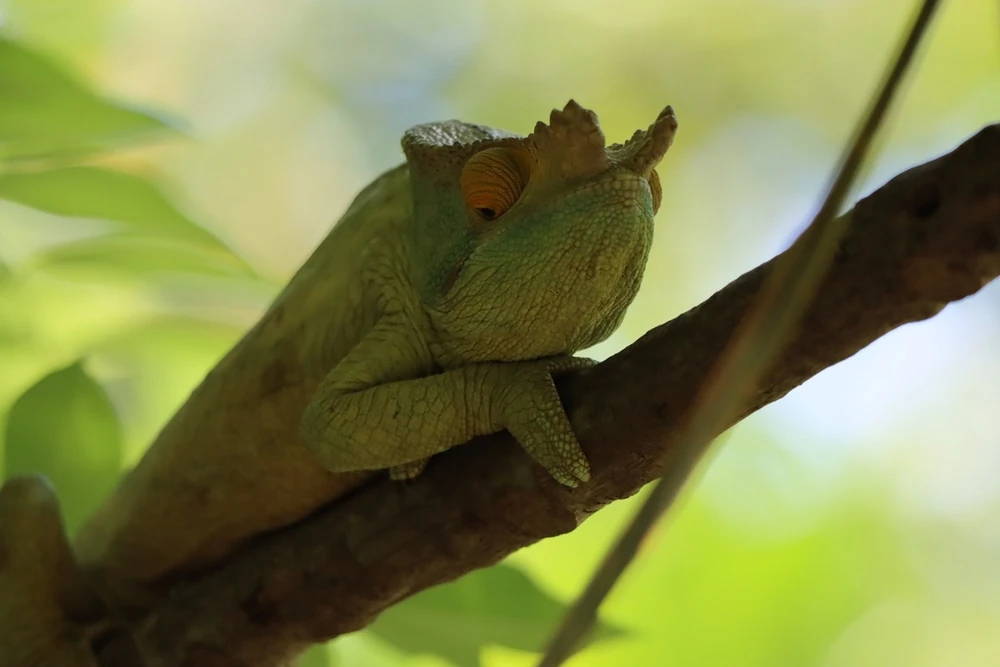
Parson's chameleon
Calumma parsonii
Calumma parsonii · observation 346410648 · amantedarmanin · CC BY
Range: Endemic to eastern and northeastern Madagascar; recorded from sea level to approximately 2,134 m.
Habitat: Arboreal in forest habitats.
Diet: Primarily insectivorous and an ambush predator; reported prey includes mantises, beetles, moths and cockroaches, with occasional small vertebrates and plant material.
Facts and sources
- Its eyes can move independently, allowing the chameleon to inspect different parts of its surroundings at the same time. Adults commonly show green-based coloration and bright orange eyes.
- It hunts by ambush, with reported prey including mantises, beetles, moths and cockroaches. Small vertebrates and plant material are also occasionally reported.
- During the day, individuals bask and shift between sun and shade; near dusk they usually settle to roost in trees.
- Females bury their eggs and leave them underground. Incubation commonly lasts about a year, but a captive report recorded hatching after 781 days.
- The species is assessed as Near Threatened and is listed in CITES Appendix II, an international trade-control category.
Research sources
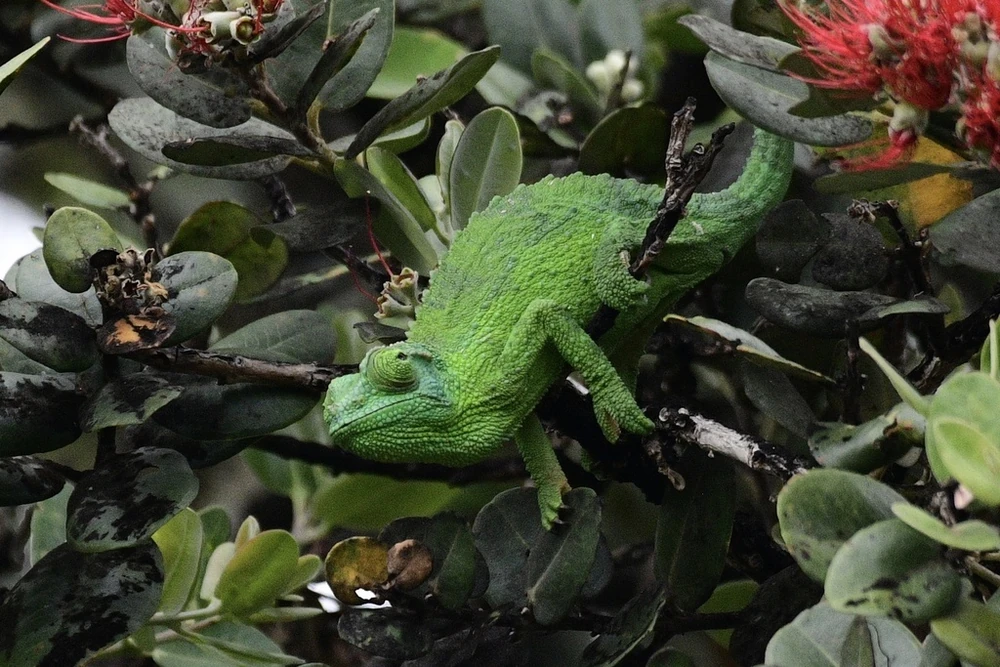
Jacksons Chameleon
Trioceros jacksonii
Trioceros jacksonii · observation 398036391 · Robin White · CC BY
Range: Native populations occur in the highlands of Kenya and Tanzania. Introduced populations are recorded in Hawaii and California; these are separate from the African native range.
Habitat: An arboreal chameleon associated with mountain thickets and forest, using trees and vegetation for cover.
Facts and sources
- Males bear three pointed head horns, a conspicuous identification feature.
Research sources
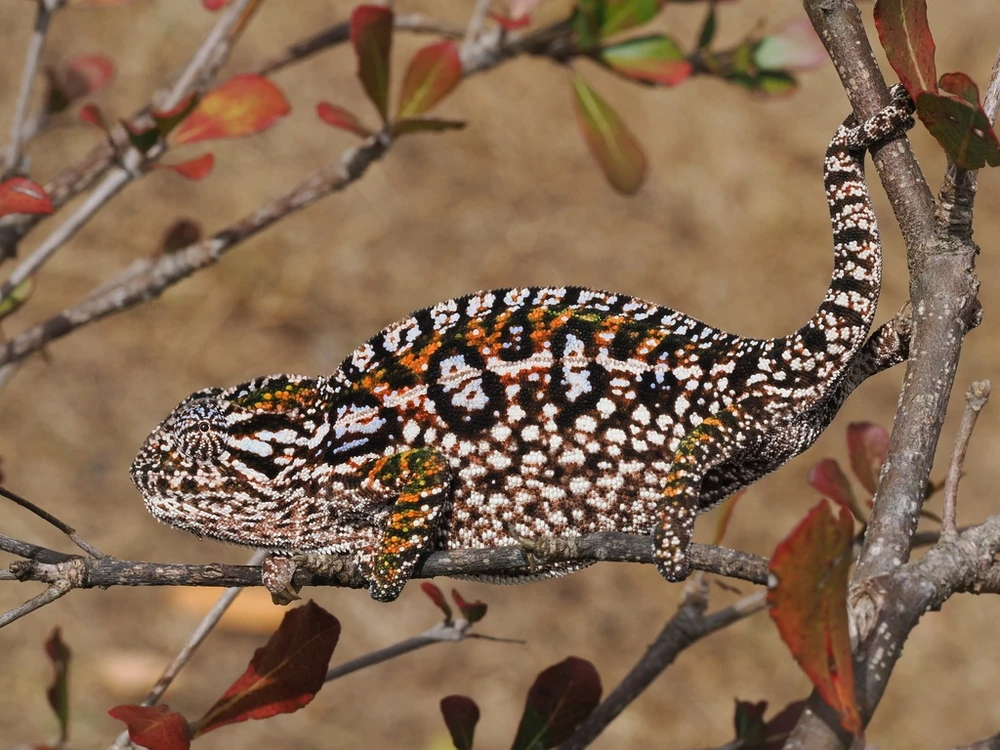
Carpet chameleon
Furcifer lateralis
Furcifer lateralis · observation 377710786 · Justin Philbois · CC0
Range: Madagascar, Eastern Madagascar, Central Madagascar, Central plateau, Some southeastern lowlands
Habitat: Arboreal, Saxicolous, Terrestrial, Grassland, Savanna
Diet: Primarily insectivorous, with some plant material also reported; recorded prey includes flies, grasshoppers, crickets, insect larvae, and—especially in captivity—occasional very small lizards and newborn rodents.
Facts and sources
- Its diet is centered on insects such as flies, grasshoppers, crickets, and insect larvae, but plant material is also reported. Captive individuals have additionally been recorded taking very small lizards and newborn rodents.
- This is a daylight-active chameleon: it warms in sunlight early in the day, then hunts through the remaining daylight hours.
- Females bury their eggs in soil. Reported clutches range from approximately 8–23 eggs, although another dataset gives a broader 4–23-egg range.
Research sources
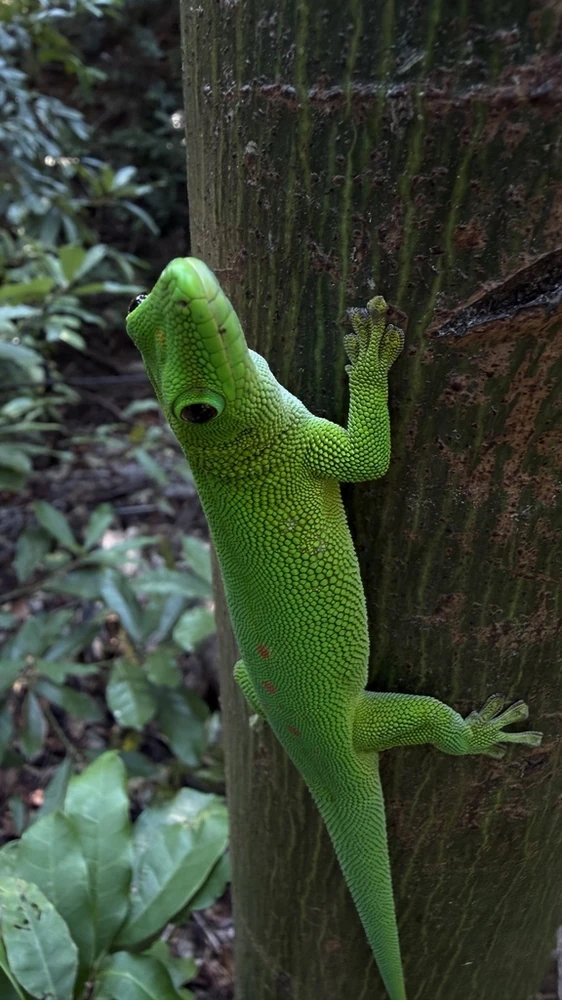
Madagascar Giant Day Gecko
Phelsuma grandis
Phelsuma grandis · observation 403625091 · Павлик Лисицын · CC BY
Range: Northern Madagascar
Habitat: Arboreal in forest habitat.
Diet: Omnivorous; eats arthropods and other invertebrates, and also consumes fruit, honey or nectar-like foods.
Facts and sources
- Look for the red stripe running from the eye toward the snout, red body spotting and large blue-ringed eyes. The toes have adhesive lamellae—specialized gripping scales—and no claws.
- Daylight is its active period. It may rest or bask on smooth surfaces, where its adhesive toe structures help it grip.
- A typical clutch contains two eggs, and females may produce several clutches in a year. Incubation lasts approximately 47–82 days.
Research sources
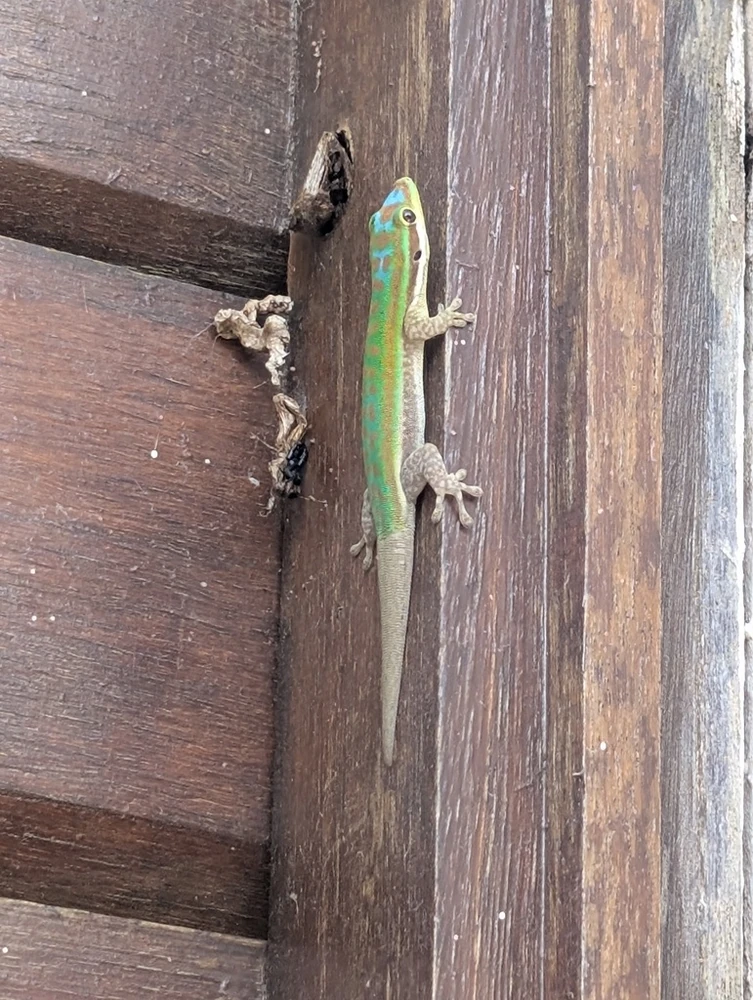
Blue-tailed day gecko
Phelsuma cepediana
Phelsuma cepediana · observation 403790231 · Zoltán Stekkelpak · CC0
Range: Native to Mauritius; introduced populations or records are reported from Rodrigues and Madagascar, including Ivoloina.
Habitat: forest, arboreal
Diet: insects, arthropods, fruit, nectar
Facts and sources
- Although mainly active by day, individuals have been documented foraging and otherwise moving around artificial lights at night.
- The species is native to Mauritius, while introduced populations or records are reported from Rodrigues and Madagascar, including Ivoloina.
Research sources
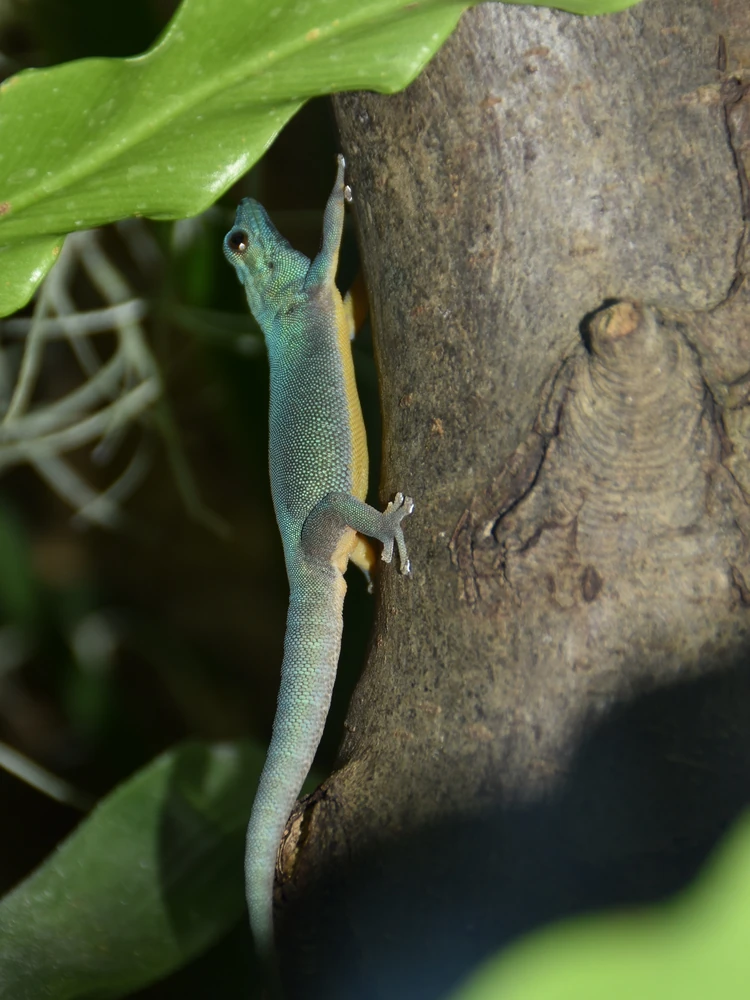
Turquoise dwarf gecko
Lygodactylus williamsi
· NasserHalaweh · CC BY-SA 4.0
Range: A Tanzanian gecko. The species was described from Kimboza Forest; the 2012 IUCN assessment also records the Ruvu Forest Reserve. Country and locality statements are source-specific.
Habitat: Arboreal; forest
Facts and sources
- This gecko is recorded as arboreal, with forest listed as its habitat type.
- Males have a vivid turquoise upper surface, a dark stripe through the eye, and fine dark speckling on the flanks.
Research sources
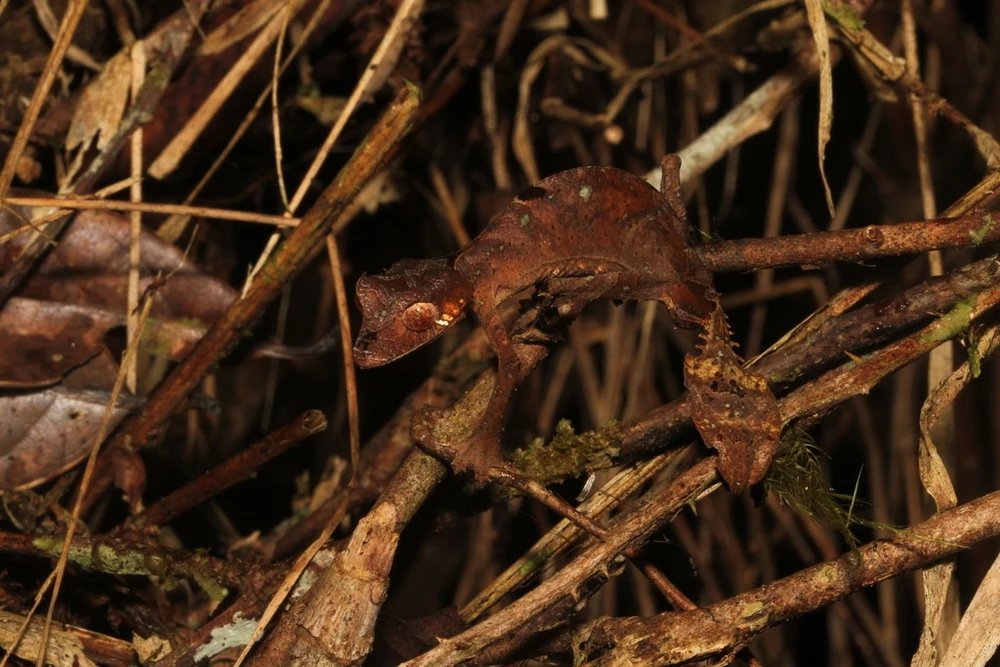
Satanic Leaf Tailed Gecko
Uroplatus phantasticus
Uroplatus phantasticus · observation 332737342 · Samuel GUIRAUDOU · CC BY
Range: Endemic to Madagascar, in eastern rainforest regions.
Habitat: Arboreal in eastern Madagascar rainforests, usually among trees, shrubs, and low vegetation within roughly 3 m of the ground.
Diet: Wild diet is poorly documented; in human care, it eats small invertebrates such as crickets and moths.
Facts and sources
- Its flattened, leaf-like tail, mottled brown, gray, or rust coloration, and lichen-like patches help it blend into forest surroundings. Vein-like ridges and notches make the tail resemble a damaged dead leaf.
- The eyes have vertical pupils, and pointed scales above the eyes give the head a horned appearance—useful features for recognizing this small gecko.
- When threatened, it may gape to reveal a bright mouth and produce a loud call, shifting from camouflage to a conspicuous warning display.
- Females place clutches of two spherical eggs among leaf litter on the forest floor. Egg-laying begins near the start of Madagascar’s rainy season, around November.
- Although it lives in trees and shrubs, it is usually found in vegetation close to the ground—within roughly 3 m—rather than high in the canopy.
Research sources
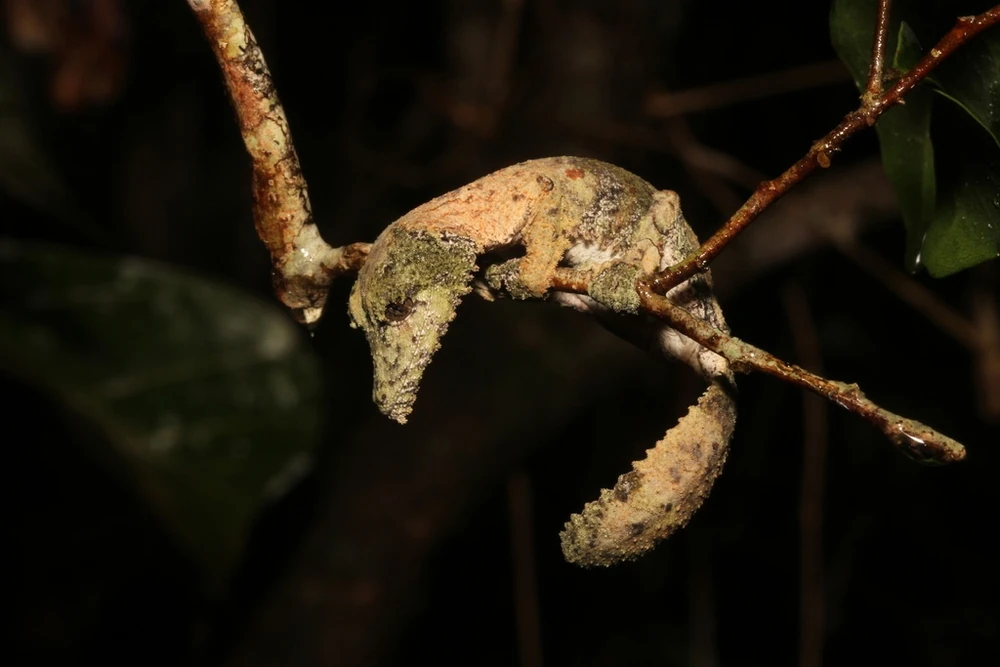
Mossy leaf-tailed gecko
Uroplatus sikorae
Uroplatus sikorae · observation 332132696 · Samuel GUIRAUDOU · CC BY
Habitat: Arboreal in forest habitat.
Diet: Carnivorous; documented diet includes insects.
Facts and sources
Research sources
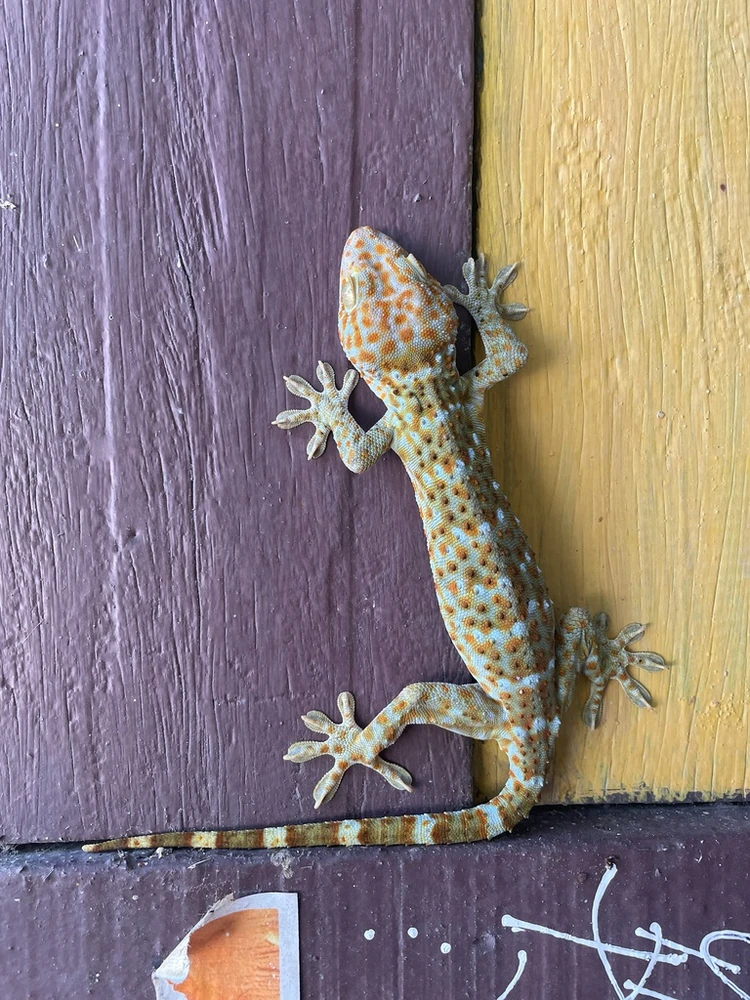
Tokay Gecko
Gekko gecko
Gekko gecko · observation 402423241 · Christian Waddingham · CC0
Range: Native across South and Southeast Asia; introduced populations occur in places including Florida and Hawaii.
Habitat: Arboreal in tropical rainforest, rocky crevices, and human-made environments.
Diet: Primarily eats invertebrates, but may also take small rats, mice, and snakes.
Facts and sources
- Its thick, cylindrical body is bluish-gray to gray and marked with red, orange, yellow, or black spots. Prominent eyes with vertical pupils and visible ear openings are useful features to look for.
- Microscopic setae—tiny bristle-like structures—cover its adhesive toe pads, helping it climb vertical surfaces and even overhangs.
- The gecko can lighten or darken its coloration for camouflage. Skin folds can also reduce the visible shadow of its body against tree surfaces.
- If threatened, it can use tail autotomy: shedding its tail as a defensive escape mechanism.
- Its diet is mostly invertebrate prey, ranging from mosquitoes and termites to grasshoppers, beetles, cockroaches, crickets, moths, and spiders; it may also take small vertebrates such as rats, mice, and snakes.
Research sources
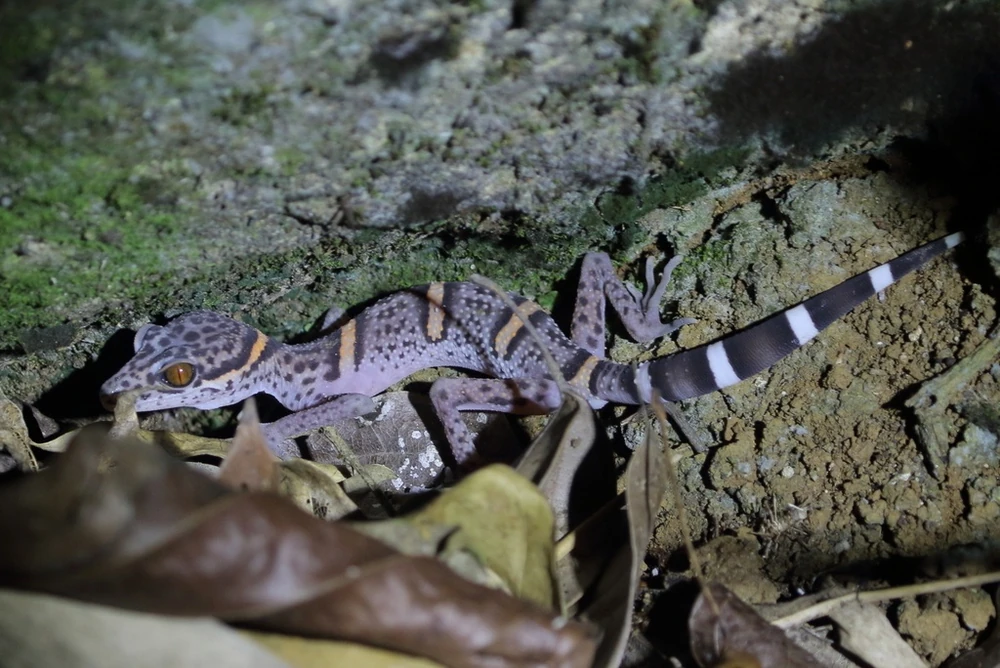
Lui's cave gecko
Goniurosaurus luii
Goniurosaurus luii · observation 189397645 · Richard Fuller · CC0
Range: Known from northern Vietnam and the border region of western Guangxi, China.
Habitat: A karst-forest specialist associated with limestone formations, evergreen broad-leaved forest, high vegetation cover, high humidity, stable temperatures, dry-rock substrates, caves and subterranean environments.
Facts and sources
- It is tied to karst landscapes: limestone formations, humid evergreen forest, and dry-rock surfaces are part of its recorded habitat.
- Its known range spans northern Vietnam and the border region of western Guangxi in China.
Research sources
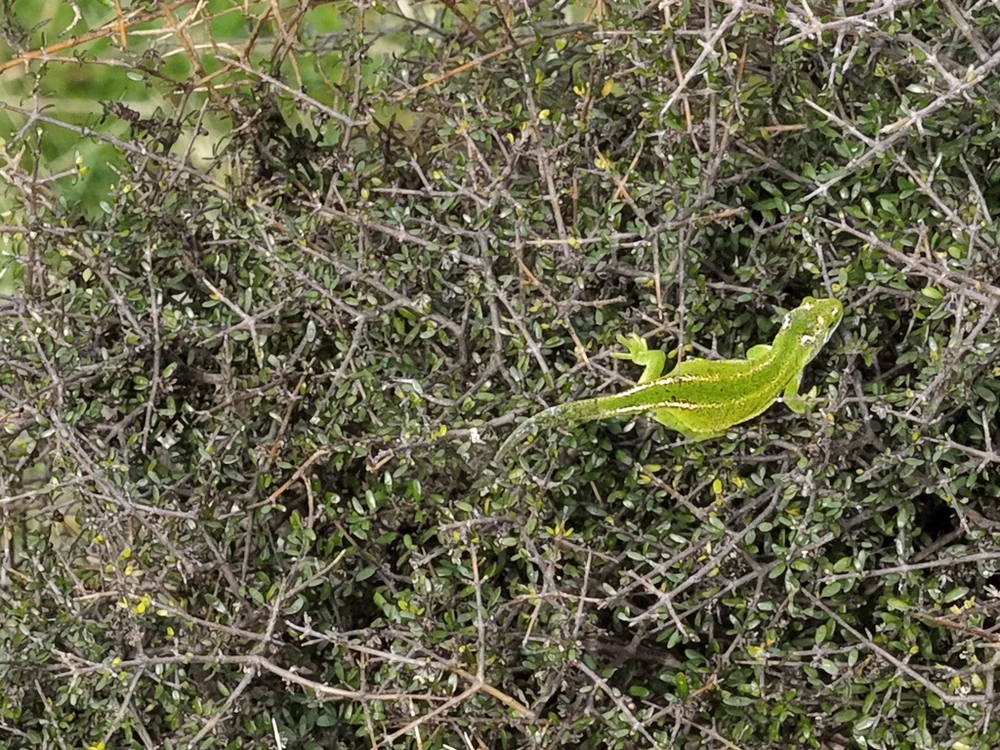
Jewelled gecko
Naultinus gemmeus
Naultinus gemmeus · observation 399689916 · Carey_Knox_Southern_Scales · CC0
Habitat: Arboreal; associated with shrubland.
Diet: insects, fruit, nectar
Facts and sources
- It lives above the ground in shrubland and is active during the day.
- Pregnancy lasts about seven months, and births take place in mid- to late autumn—an unusual schedule for a cool-climate gecko.
Research sources
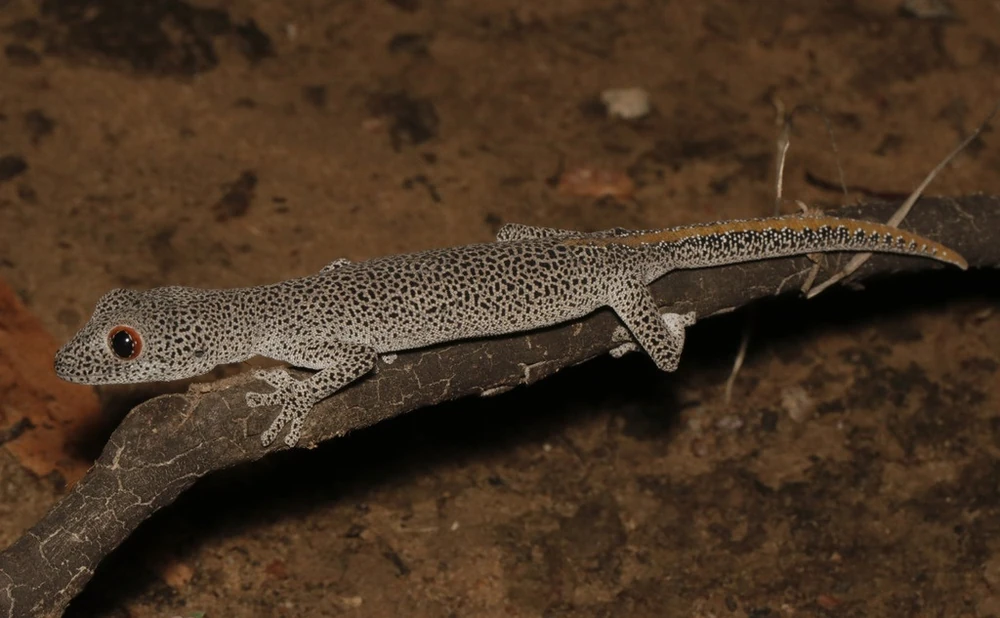
Golden-tailed gecko
Strophurus taenicauda
Strophurus taenicauda · observation 334072416 · Ryan van Huyssteen · CC BY
Habitat: Uses open woodlands and open forests, often where cypress pines occur. It is generally arboreal and shelters beneath loose bark or in hollow tree limbs.
Facts and sources
- During the day, it can shelter beneath loose bark or inside hollow tree limbs—useful places to look for an arboreal gecko in woodland.
Research sources
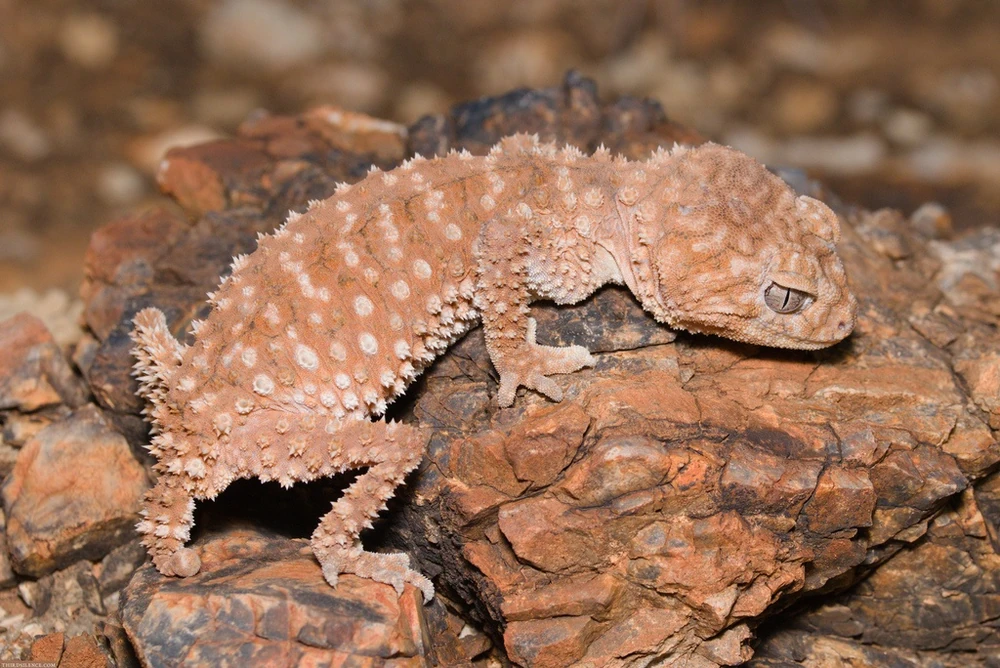
Centralian rough knob-tailed gecko
Nephrurus amyae
Nephrurus amyae · observation 78279411 · Third Silence · CC BY SA
Habitat: Desert, Rocky habitat, Terrestrial, Saxicolous
Diet: Insects, Arthropods
Facts and sources
- It is identified by an extremely spiny rump and thighs, with irregular basal scales around the tubercles in those areas.
- A recorded clutch contains two eggs.
- It is the largest and most heavily spined member of the Nephrurus asper species group.
Research sources
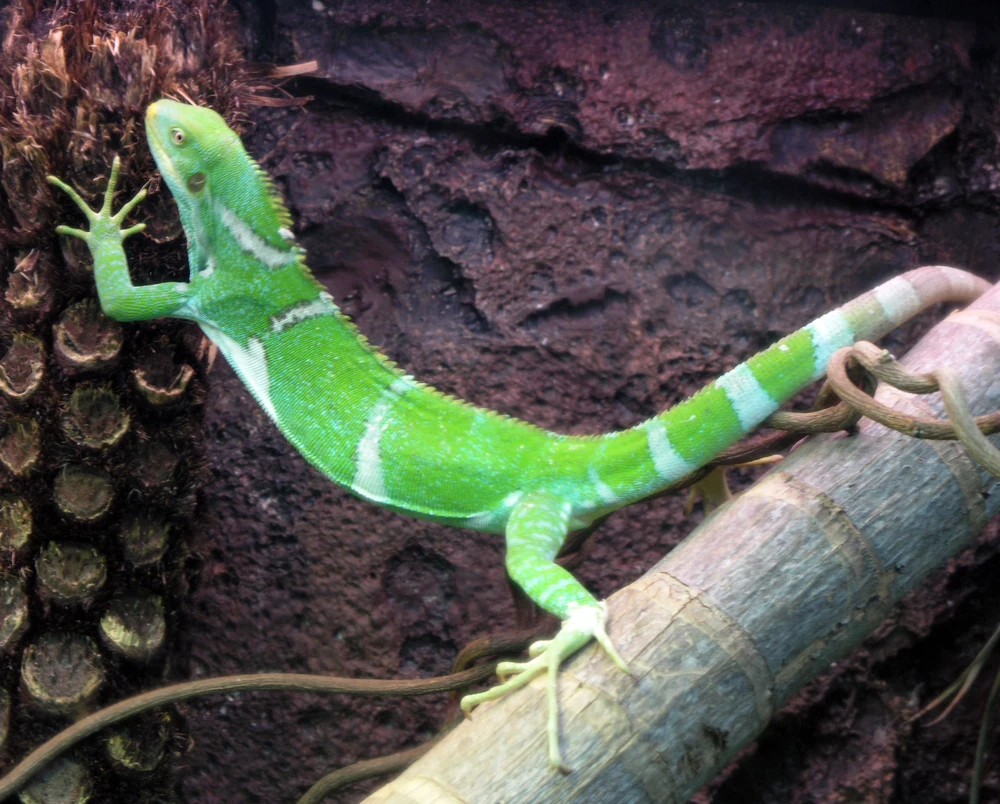
Fiji crested iguana
Brachylophus vitiensis
· SeanMack · CC BY-SA 3.0
Habitat: Arboreal; associated with forest habitat
Diet: Herbivorous
Facts and sources
- This iguana is herbivorous, feeding on plant material.
- The retained trait record gives a maximum snout-vent length of 255 mm; this excludes the tail and is not carapace length.
- The retained 2012 assessment data classify the species as Critically Endangered and record a decreasing population trend; this is a dated assessment, not a newly checked 2026 status.
Research sources
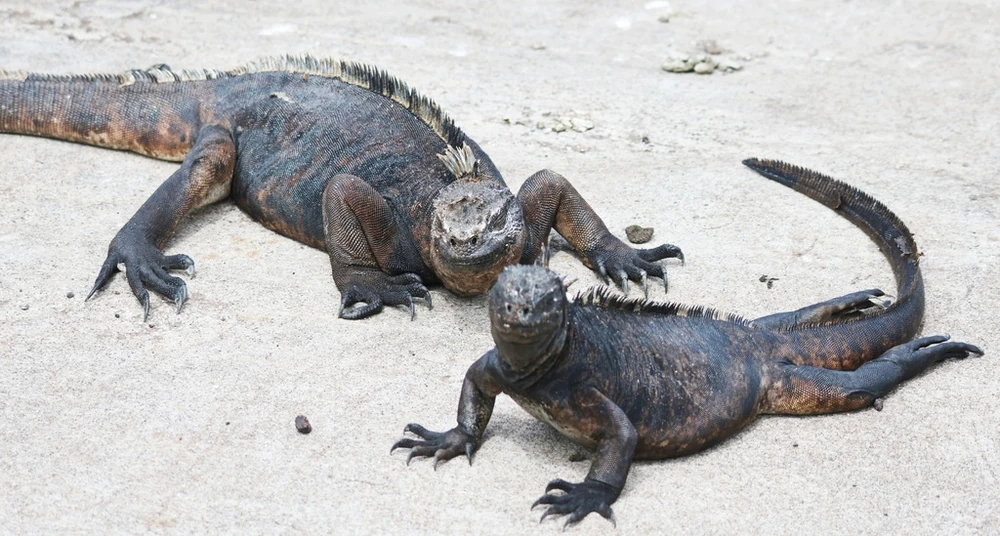
Marine Iguana
Amblyrhynchus cristatus
Amblyrhynchus cristatus · observation 406884227 · Susan Blayney · CC BY
Habitat: Found on volcanic Galápagos islands, especially rocky cliffs, low ledges, intertidal flats and coastal areas with ocean access; females also need sandy or volcanic-ash nesting sites.
Diet: Feeds almost exclusively on marine algae from intertidal and submerged algal beds.
Facts and sources
- Its diet is unusually specialized: it feeds almost exclusively on marine algae, including algae growing in intertidal and submerged beds.
- Females bury their eggs in sand or volcanic ash, using nesting burrows that may be 30–80 cm deep. The young hatch after approximately 95 days of incubation.
- Males defend mating territories during an approximately three-month breeding season, while nesting generally takes place from January to April, depending on the island.
- The species is gray to black, with pyramid-shaped dorsal scales, a short blunt snout and a slightly laterally compressed tail. Juveniles may show a lighter stripe along the back.
Research sources
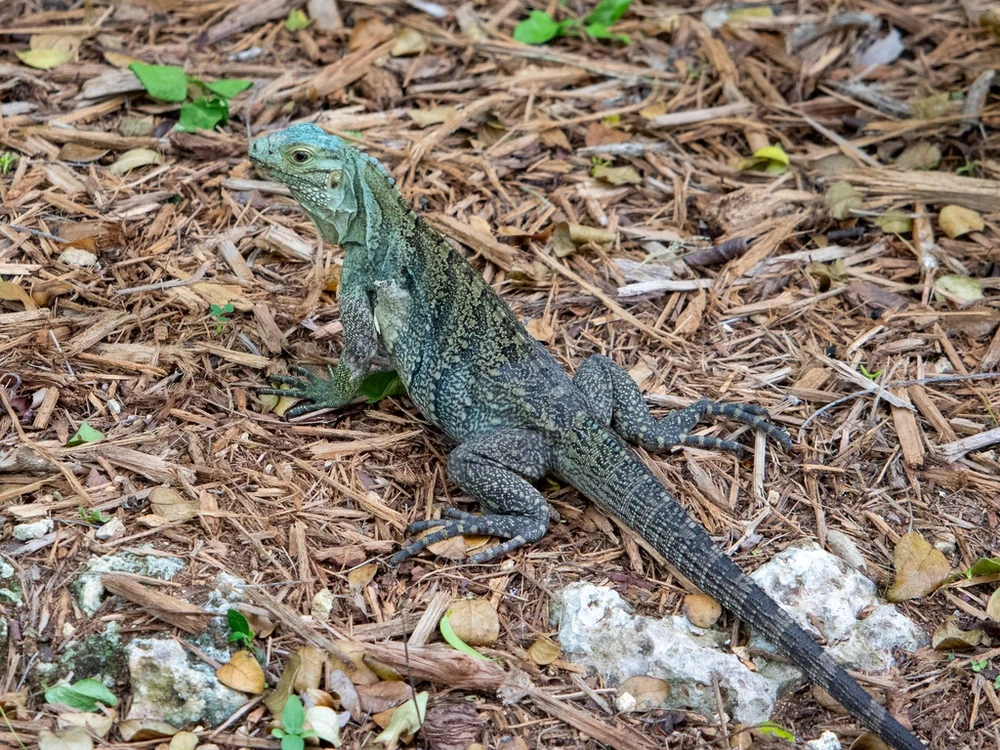
Grand Cayman blue iguana
Cyclura lewisi
Cyclura lewisi · observation 296606627 · Dan Schofield · CC BY
Habitat: Terrestrial; associated with forest and shrubland habitats.
Diet: Herbivorous.
Facts and sources
- This iguana is active by day and may spend long periods basking or searching for food on the ground. At night, it retreats into rock crevices, caves, or other covered places.
- The species is classified as Endangered in the IUCN Red List assessment, while its recorded population trend is increasing.
- Its habitat record combines a terrestrial way of life with forest and shrubland habitat types.
Research sources
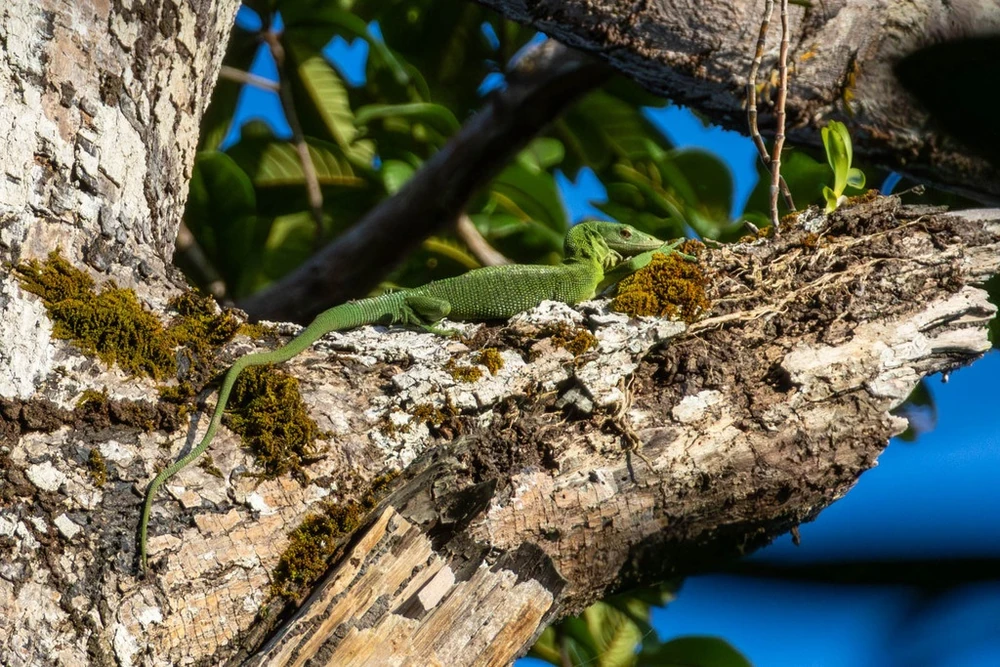
Emerald Tree Monitor
Varanus prasinus
Varanus prasinus · observation 325379382 · Richard Fuller · CC0
Habitat: Strongly arboreal in humid tropical, heavily forested lowland habitats, including rainforest, mangrove and cocoa plantations.
Diet: Katydids, Grasshoppers, Centipedes, Spiders, Beetle larvae, Small arboreal mammals, Other vertebrates, Occasional plant material
Facts and sources
- Its very long tail can grip branches, while grasping feet and long claws help it move through the tree canopy.
- The emerald monitor searches a varied menu among the branches, including insects and other arthropods, with small arboreal mammals taken occasionally.
- Although often associated with rainforest, this strongly tree-dwelling lizard is also recorded from mangroves and cocoa plantations.
- Females lay eggs, and captive breeding reports describe incubation lasting about 154–190 days.
Research sources
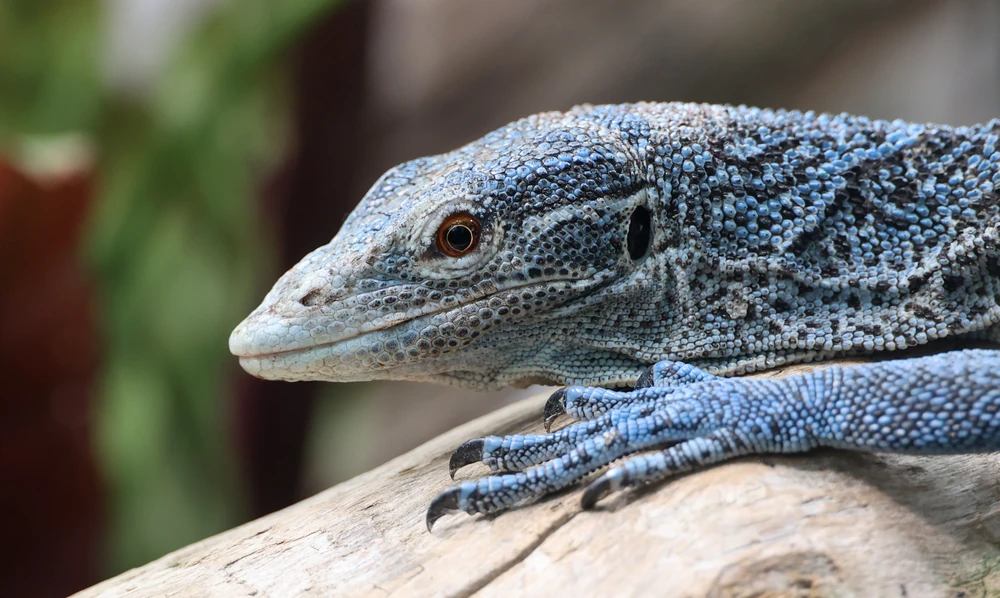
Blue-spotted tree monitor
Varanus macraei
· Clément Bardot · CC BY-SA 4.0
Range: Endemic to Batanta Island in the Raja Ampat Islands of Papua, Indonesia; some assessments also include associated small offshore islets.
Habitat: Diurnal and arboreal in low-lying humid forest.
Diet: Primarily feeds on invertebrates.
Facts and sources
- Sharp claws help this monitor grip surfaces, and its long prehensile tail can grasp branches—useful equipment for life in the trees.
- It is active during the day and lives in humid lowland forest, where it spends its life in an arboreal setting.
- Females lay eggs in clutches reported to contain 2–7 eggs, and may produce up to four clutches in a year. In one captive observation, fertile eggs hatched after approximately 23 weeks.
Research sources
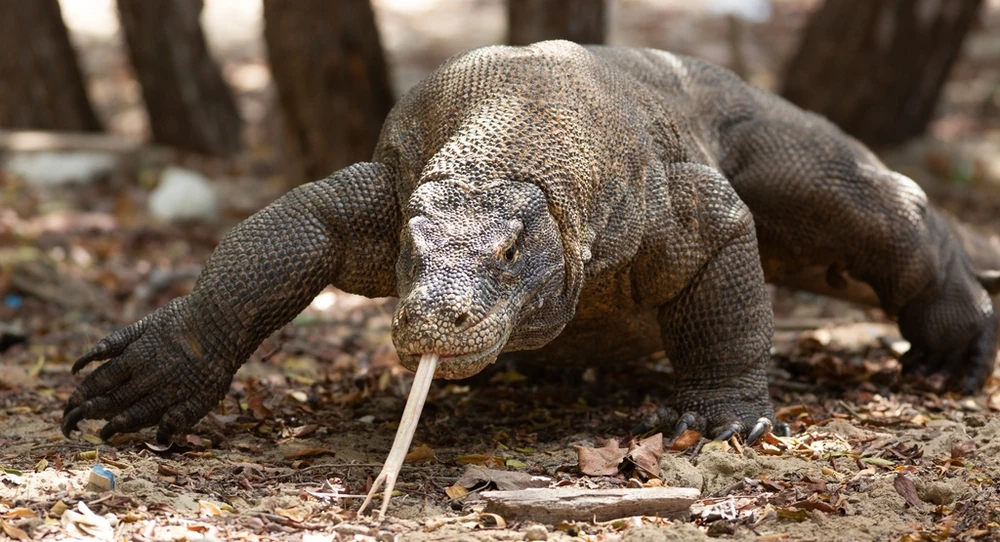
Komodo Dragon
Varanus komodoensis
Varanus komodoensis · observation 401815010 · anguspritchard · CC BY
Habitat: Terrestrial habitats including forest and savanna.
Diet: Carnivorous and scavenging. Adults eat carrion and large vertebrates; juveniles take insects, small reptiles, eggs, and birds.
Facts and sources
- A Komodo dragon's diet changes with age. Adults can consume carrion and large vertebrates such as deer, pigs, goats, and water buffalo, while juveniles hunt smaller prey including insects, reptiles, eggs, and birds.
- It is mainly active by day, but a burrow provides a cooler retreat at night and during very hot weather.
- Adults are generally stone-colored and have heavy bodies, sturdy limbs, large distinct scales, and a yellow forked tongue; juveniles are more vividly patterned.
Research sources
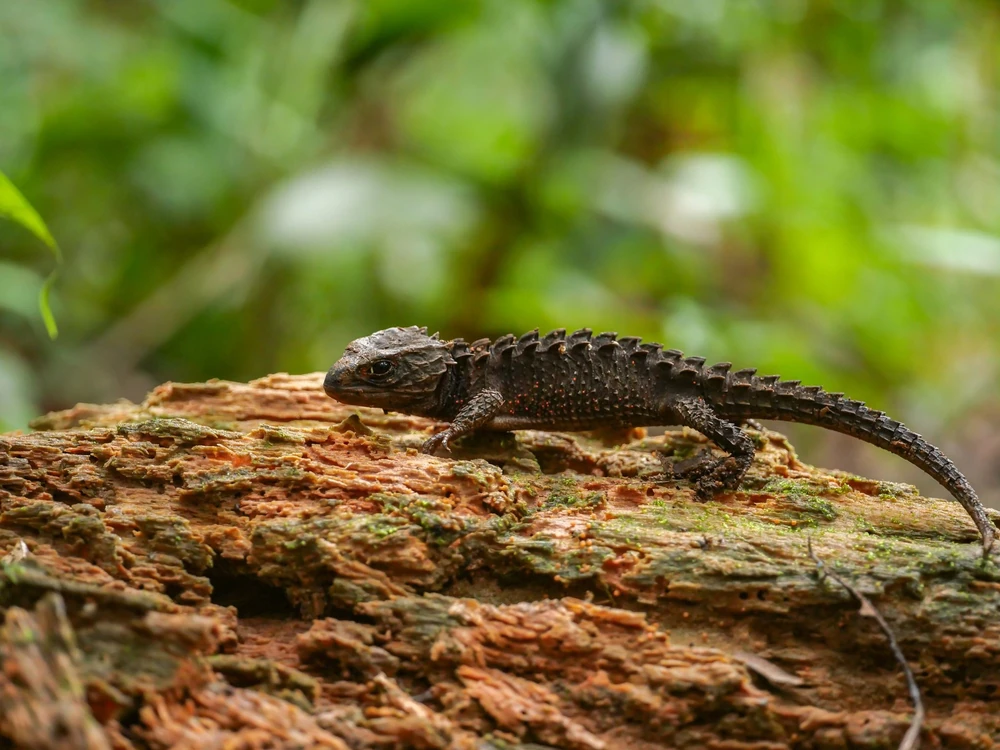
Red Eyed Crocodile Skink
Tribolonotus gracilis
Tribolonotus gracilis · occurrence 4465380200 · Philipp Hoenle · CC0
Range: Restricted to New Guinea. Papua New Guinea is listed, while an Admiralty-Islands/Manus record is flagged as potentially erroneous.
Habitat: Terrestrial in forest habitat.
Diet: Insects
Facts and sources
- Females lay a single egg per clutch. The species is oviparous, meaning it reproduces by laying eggs.
- Species-specific literature documents parental-care behavior, an unusual detail to watch for when observing breeding individuals.
- This skink is recorded as active during the day and living terrestrially in forest habitat.
- Its recorded diet is carnivorous, with insects specifically noted as food in captivity.
Research sources
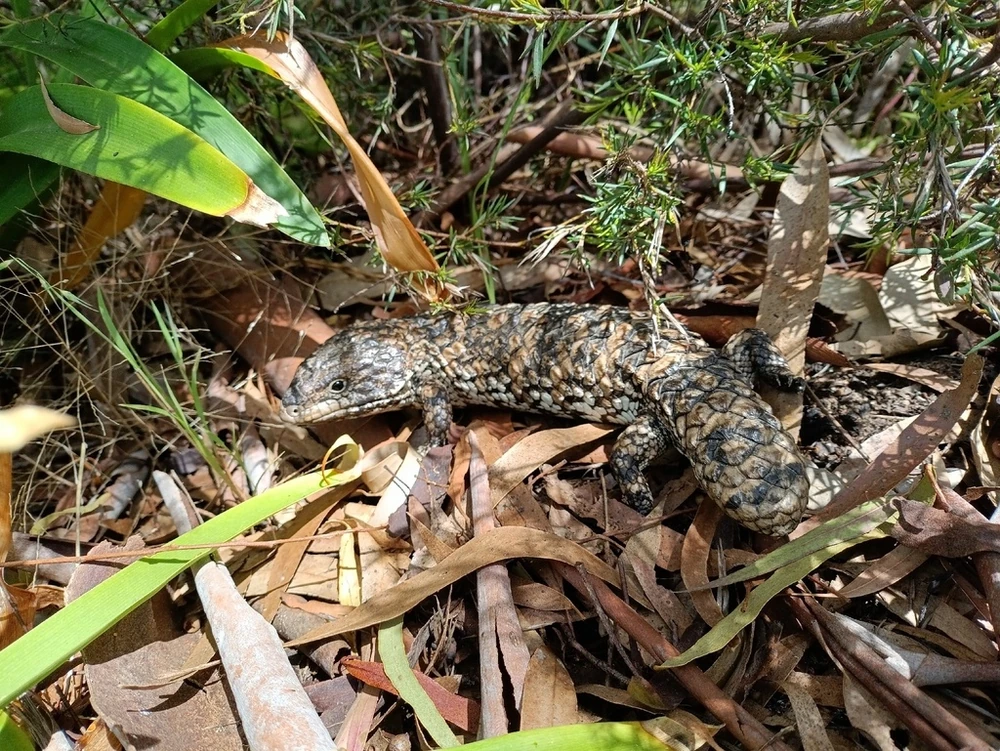
Shingleback
Tiliqua rugosa
Tiliqua rugosa · observation 406930659 · Niko Ioannidis · CC BY
Habitat: Shrubland, Eucalyptus forest, Desert grassland, Sandy dunes, Dry, open environments
Diet: Omnivorous, but predominantly herbivorous; eats plant material as well as snails, beetles and other small animal foods.
Facts and sources
- Its large, rough scales, oversized head and short blunt tail give it a distinctive shingle-like appearance. The dark-blue tongue contrasts with the pink mouth, while the body is commonly brown to black with irregular pale bands.
- Although it is classified as omnivorous, plant material makes up most of its diet. It also takes slow-moving prey such as snails and beetles.
- A morning shingleback may be seen basking before it begins foraging in the warmer part of the day. During cold weather, it can remain inactive in a shelter for extended periods.
- Shinglebacks give birth to live young rather than laying eggs. A typical litter contains two or three young, with births occurring from December to April after the spring mating period.
Research sources
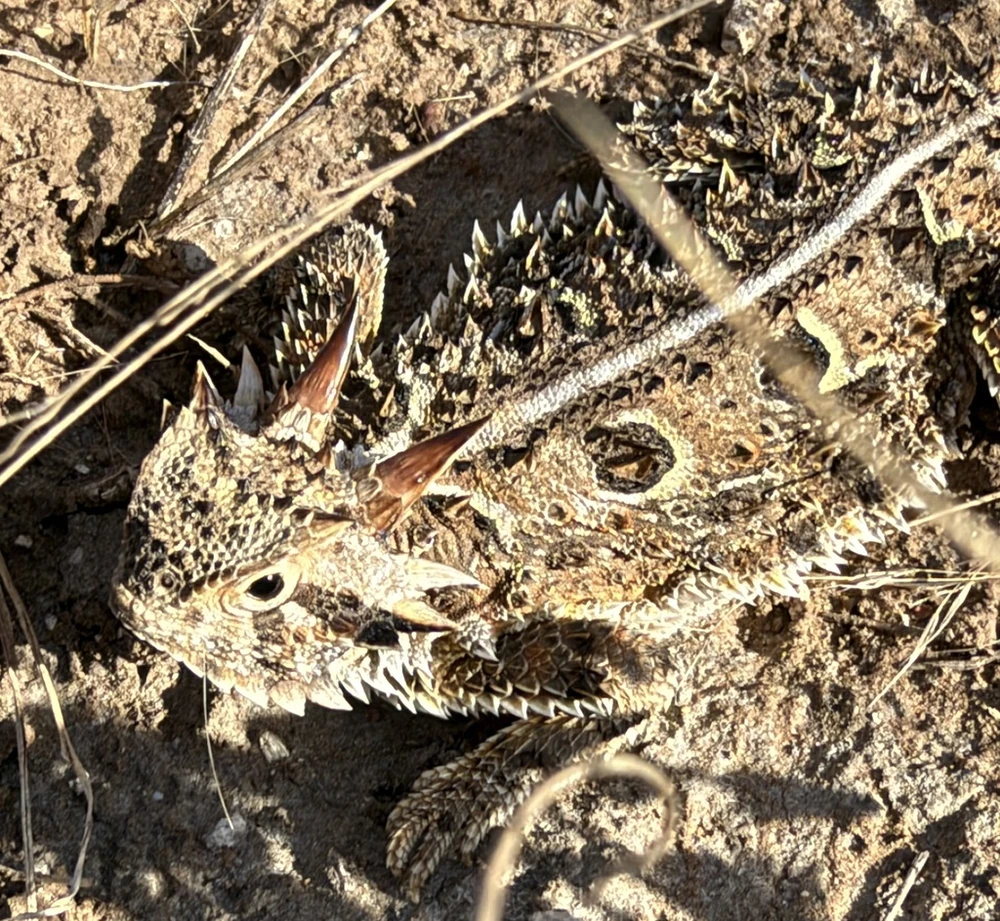
Texas Horned Lizard
Phrynosoma cornutum
Phrynosoma cornutum · observation 403333102 · Scott Holt · CC BY SA
Range: Occurs from the south-central United States into northern Mexico, including much of Texas, Oklahoma, Kansas, and New Mexico.
Habitat: Open arid habitats, Open semiarid habitats, Grassland with sparse vegetation, Cactus, brush, or scrubby-tree habitats with loose sand or loamy soil
Diet: Primarily eats harvester ants, especially Pogonomyrmex rugosus; other insects are taken opportunistically.
Facts and sources
- When threatened, it can puff up its body and eject blood from the corners of its eyes. Its cryptic coloration and burrowing also help it cope with dry, exposed habitats.
- Harvester ants dominate its diet: one stomach-content study found ants in about 69% of prey items.
- Females usually lay a single yearly clutch in a burrow, with about 14–37 eggs that hatch after roughly 40–61 days of incubation.
- Specialized channels on the back can direct rainwater toward the mouth, an adaptation documented for this dry-environment lizard.
Research sources
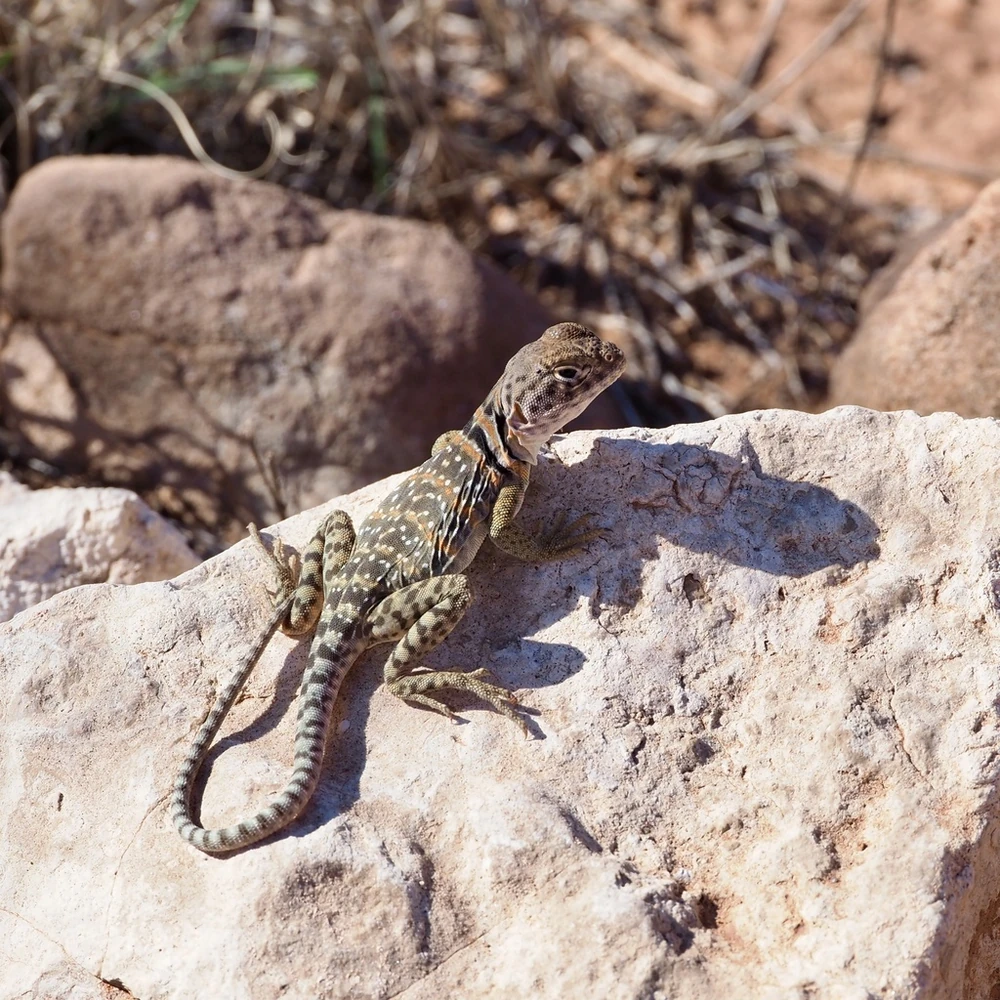
Common Collared Lizard
Crotaphytus collaris
Crotaphytus collaris · observation 407119725 · Joshua Ebright · CC BY
Range: Occurs across the south-central and eastern United States and northern Mexico, extending from the central Plains and Southwest into parts of the lower Midwest and Southeast.
Habitat: Dry, open, rocky places with exposed boulders or ledges and sparse vegetation; also found in desert scrub, grassland, shrubland, and open woodland.
Diet: Arthropods, Grasshoppers, Beetles, Spiders, Other lizards, Some plant material
Facts and sources
- Look for the pair of dark bands crossing the neck, along with dark crossbands or spots on the back. Males are often more brightly colored than females.
Research sources
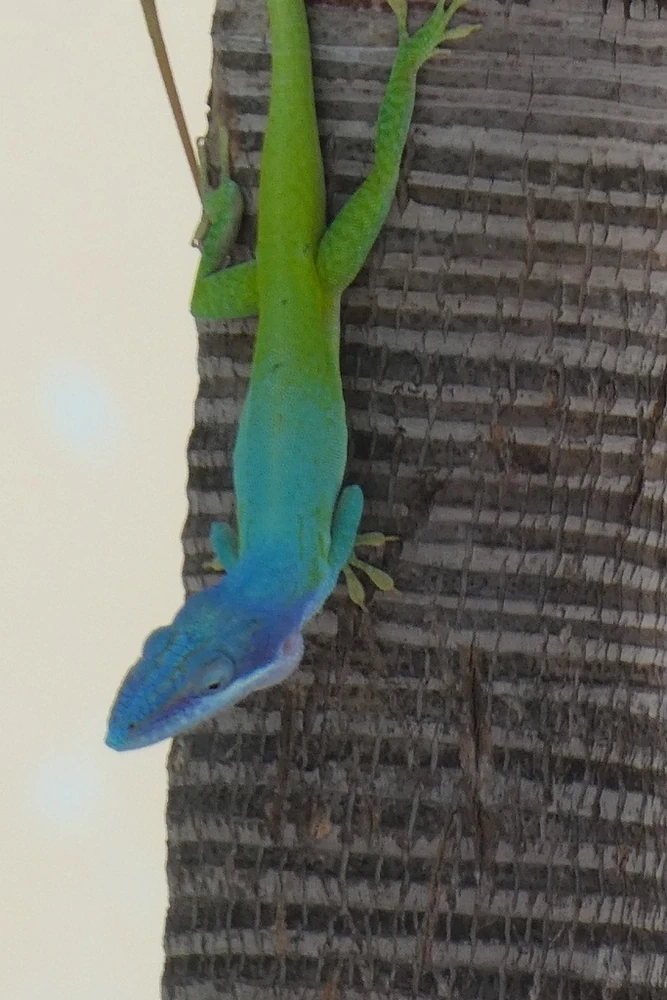
Allison's anole
Anolis allisoni
Anolis allisoni · observation 357042398 · Andrea Gobetti · CC BY
Range: Cuba, Honduras, Guanaja, Roatán, Cayos Cochinos, Belize, Islands of the Bay of Honduras, Mexico
Habitat: Arboreal habitat, Savanna, Mangrove-island habitat, Coconut palm, Saltwater palmetto, Pithecellobium keyense, Bursera simaruba
Diet: Carnivorous; feeds on invertebrates.
Facts and sources
- It is active by day. At Banco Chinchorro, researchers estimated about 8.9 hours of activity in a typical day.
- Its recorded diet is made up of invertebrates, placing small animals such as insects and other spineless prey on the menu.
- The species lays eggs; one dataset records one egg per clutch and 20 clutches produced per year.
- Adult size varies in the Banco Chinchorro sample, and males were larger than females. The recorded adult range was 48.18–88.68 mm in snout–vent length, with masses of 1.5–15 g.
Research sources
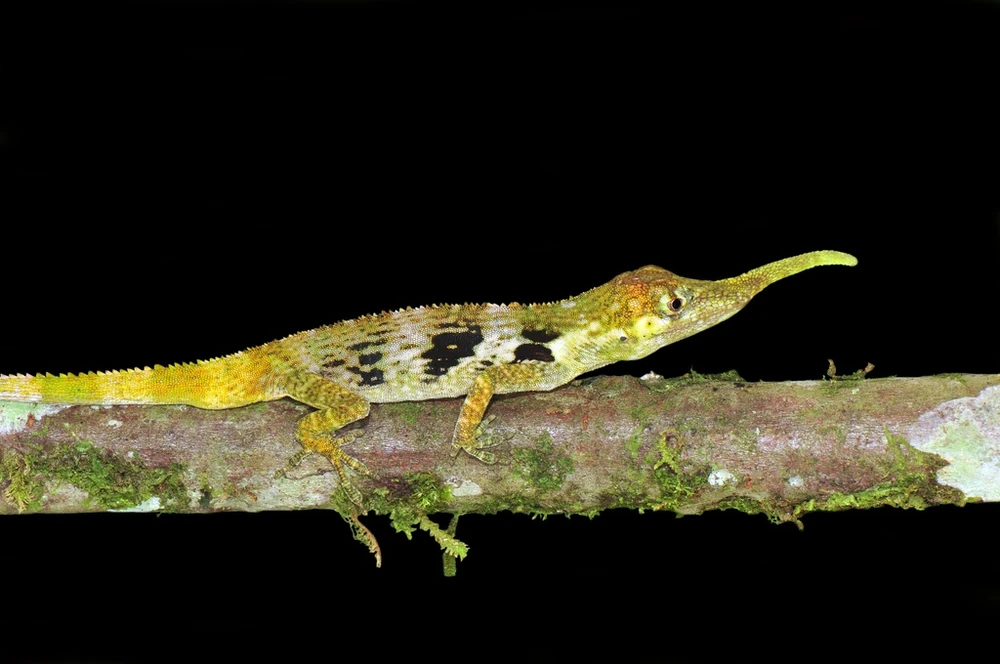
Proboscis anole
Anolis proboscis
Anolis proboscis · observation 101639032 · Tom Kennedy · CC BY
Range: Known from the Pacific-facing Andean slopes of northwestern Ecuador. Reported Peruvian occurrences remain uncertain and should not be presented as established.
Habitat: Uses lower-montane evergreen forest and adjacent wooded edges, including scattered trees and rural vegetation. It is predominantly arboreal.
Facts and sources
- Adult males carry a long, fleshy nasal appendage that projects upward, while females lack it.
- Females can be separated from the similar A. gemmosus by their smaller, less colorful throat fan, reduced ear opening, and a conspicuous central back crest made of enlarged triangular scales.
- The male has a flexible fleshy snout appendage used in social display; females lack this horn.
Research sources
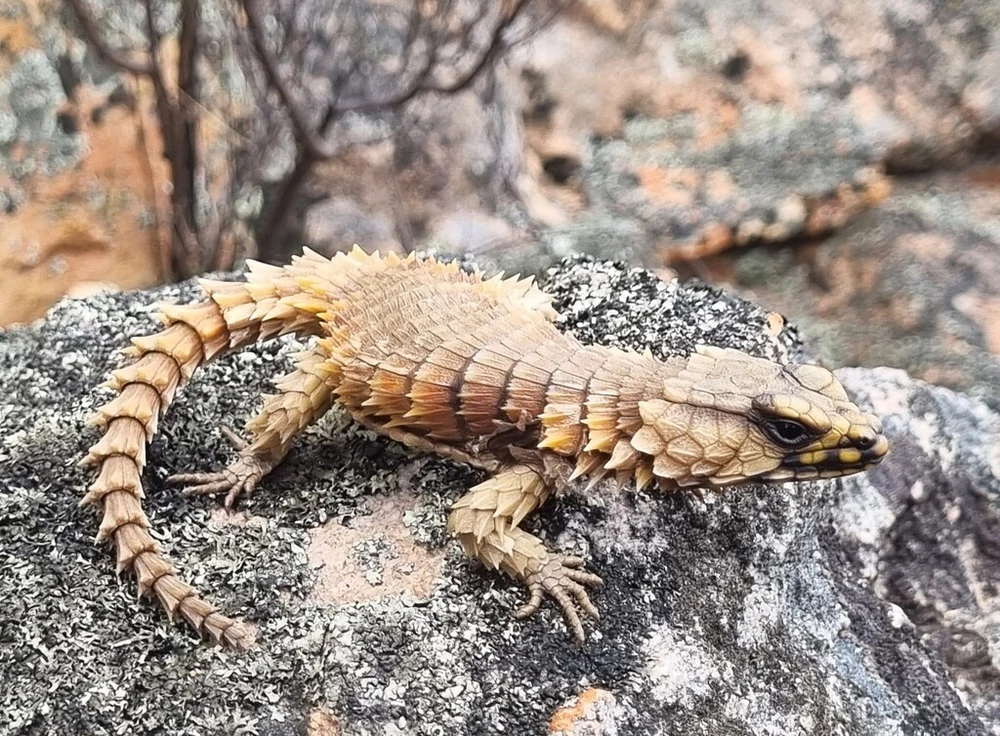
Armadillo Girdled Lizard
Ouroborus cataphractus
Ouroborus cataphractus · observation 307969538 · Marius Burger · CC0
Range: Occurs along western South Africa, from the Orange River area south toward the Piketberg Mountains, with inland records in the western Karoo.
Habitat: Shelters in cracks of rocky outcrops in dry Karoo shrubland.
Facts and sources
- This lizard is recorded from a saxicolous microhabitat and a rocky/shrubland habitat type, so rocky ground and shrubs are key features to look for in its habitat.
- When threatened, it can grip its tail with its mouth and curl into an armored defensive ring.
Research sources
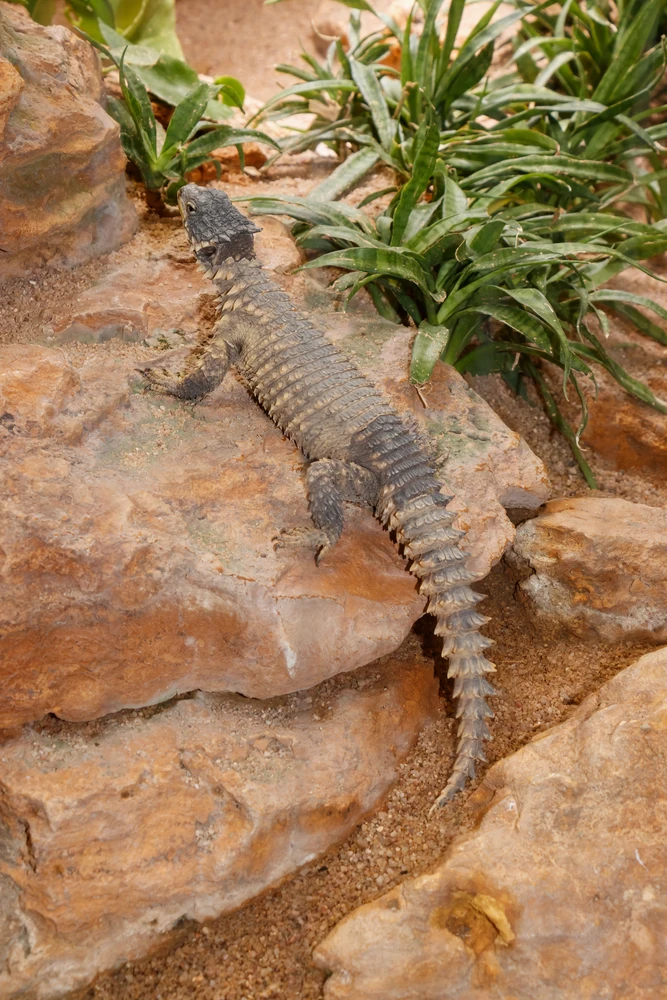
Sungazer
Smaug giganteus
· H. Zell · CC BY-SA 3.0
Range: Well-documented South African populations occur chiefly in the Free State, with smaller populations in southwestern Mpumalanga and western KwaZulu-Natal. SANBI describes South African endemism, while The Reptile Database additionally lists Lesotho; that country-level discrepancy is unresolved.
Habitat: A terrestrial lizard of Highveld grassland, occupying self-dug or available burrows in flat or gently sloping ground.
Facts and sources
- Heavy spiny scales and an armored tail help protect it; an alarmed animal can retreat to its burrow.
Research sources
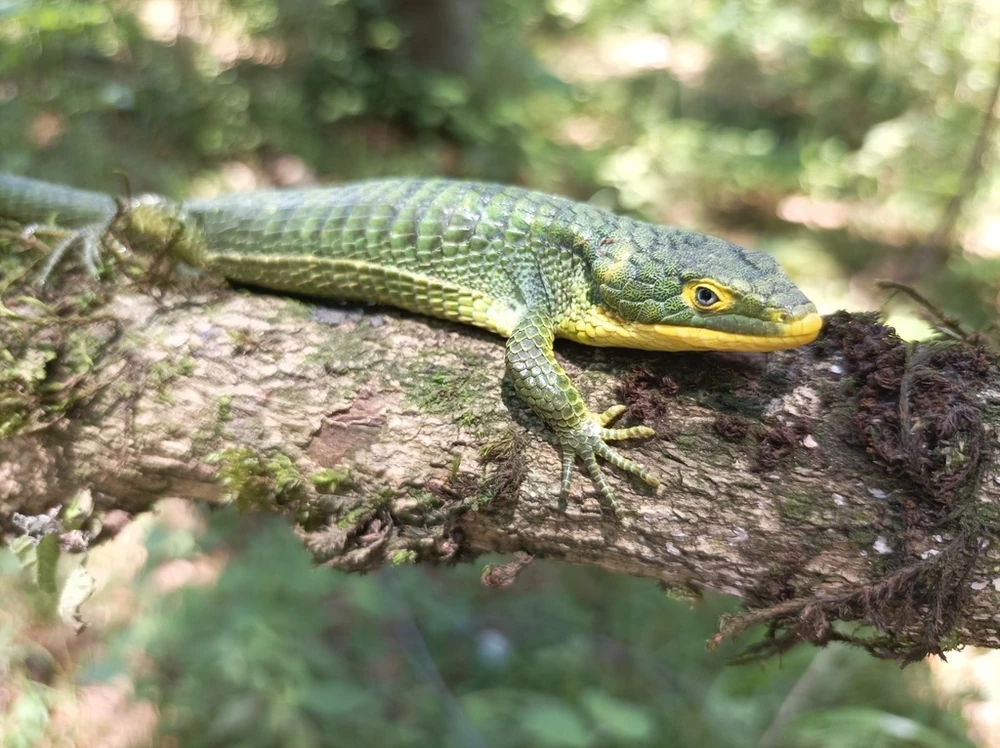
Green arboreal alligator lizard
Abronia graminea
Abronia graminea · observation 178071849 · Wouter Beukema · CC BY
Range: Veracruz, Mexico, Puebla, Mexico
Habitat: Arboreal inhabitant of humid cloud-forest canopies, especially among bromeliads and dense vegetation; reported from approximately 1,350–2,740 m elevation and commonly around 40 m above the forest floor.
Diet: Insects, Other small invertebrates, Arthropods, Lizards
Facts and sources
- Its color can range from teal-blue to deep green, set off by a pale yellow belly and yellow eye ring. Young lizards are paler and have dark stripes along the sides.
- This lizard lives above the ground in cloud-forest canopies, often among bromeliads and dense vegetation. It has been reported at elevations from approximately 1,350–2,740 m and commonly around 40 m above the forest floor.
- A prehensile tail helps identify its arboreal body plan: the tail is adapted for gripping as the lizard moves through vegetation.
- Unlike an egg-laying lizard, this species gives birth to live young. Reported reproductive figures differ between sources, ranging from approximately 7–12 young annually in one account to a ReptTraits mean of 5.0318877551020407.
- Its cloud-forest habitat faces pressure from forest destruction and agricultural expansion, while collection for the pet trade is also reported as a threat.
Research sources
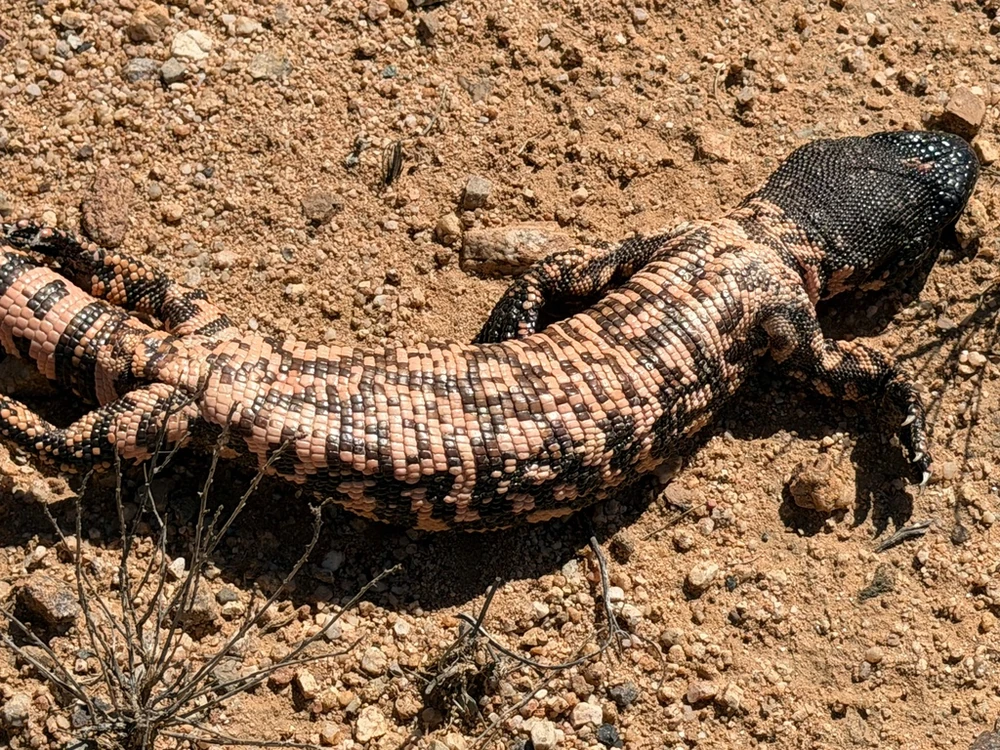
Gila Monster
Heloderma suspectum
Heloderma suspectum · observation 393253671 · CK2AZ · CC BY
Range: Occurs from Nevada south through the southwestern United States to northern Sinaloa, Mexico.
Habitat: Rocky lowlands, desert scrub, desert grassland, and rocky canyons; commonly associated with underground burrows.
Diet: Carnivorous; documented prey includes young rabbits, packrats and other rodents, eggs, nestling birds, lizards, and occasional small snakes.
Facts and sources
- Look for bead-like scales, a solid-black snout, a rounded tail, and short, stout limbs with long claws. Black bands or blotches contrast with pink, orange, or salmon coloration.
- Its tongue detects faint scents, helping the lizard gather chemical information from its surroundings.
- The young may hatch in early winter but stay underground until spring, living on residual yolk after emerging from the eggs.
Research sources
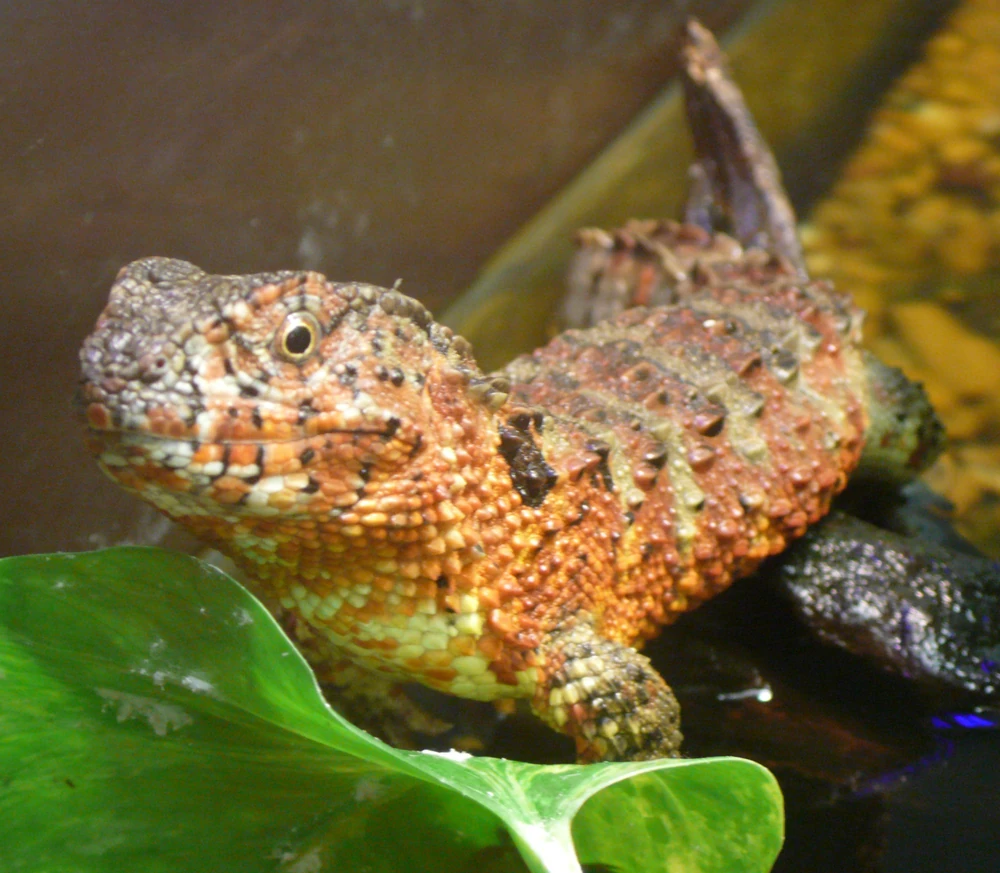
Chinese crocodile lizard
Shinisaurus crocodilurus
Chinese Crocodile Lizard (Shinisaurus crocodilurus) · TimVickers · Public domain
Range: Southern China, including Guangxi, Guangdong, Guizhou and Hunan, and northeastern Vietnam, including Quang Ninh Province.
Habitat: A semiaquatic lizard of forest and wetland habitats.
Diet: Carnivorous; feeds on aquatic invertebrates and vertebrates, including crustaceans, fish, tadpoles, aquatic snails and worms.
Facts and sources
- Its crocodilian appearance comes from a gray-brown body, a yellow-tan underside, red-orange throat and side markings, banded tail, and two rigid rows of enlarged tail scales.
- This semiaquatic lizard hunts small freshwater animals, from crustaceans and aquatic snails to fish and tadpoles.
- The species is assessed as Endangered, and its recorded population trend is decreasing.
Research sources
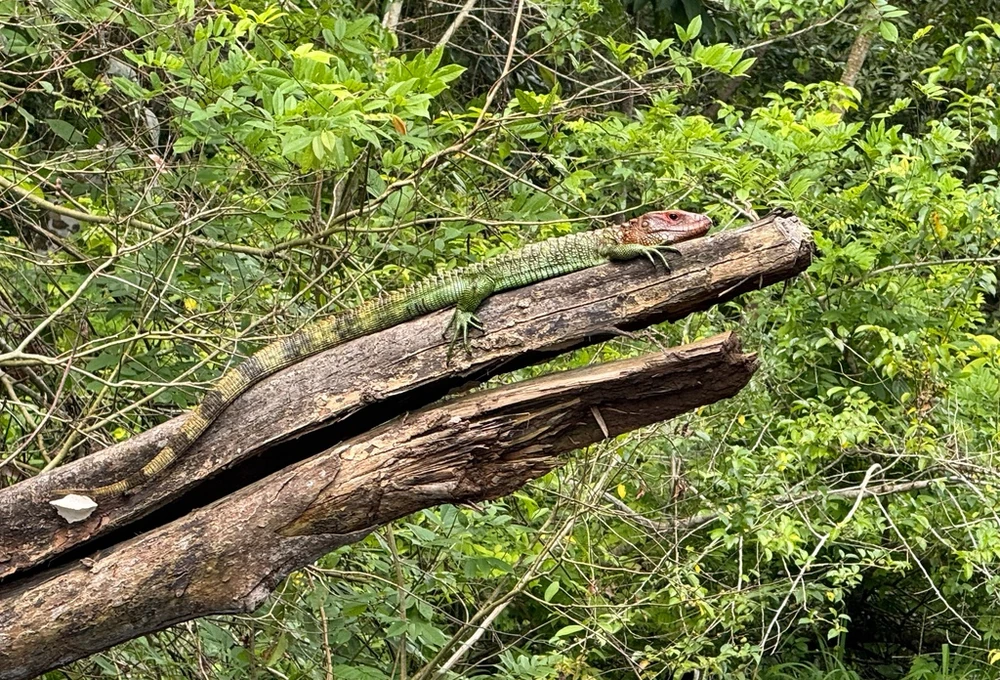
Northern caiman lizard
Dracaena guianensis
Dracaena guianensis · observation 402610559 · Christina Hewitt · CC0
Range: Occurs in northern South America, including Ecuador, Colombia, Brazil, Peru, and the Guianas.
Habitat: Swampy habitats and flooded woodlands, including marshes, flooded forests, and stream margins; often basks on low branches or roots over water.
Diet: Carnivorous; mainly eats hard-shelled aquatic or semiaquatic invertebrates, including snails, crawfish, and freshwater clams. It is also reported to prey on Amazon river turtles.
Facts and sources
- A green body, reddish-orange head, laterally flattened tail, and raised horn-like scales along the back make this lizard distinctive. Its short, rounded teeth and powerful jaws are suited to its hard-shelled prey.
- Its diet centers on aquatic or semiaquatic animals with shells, including snails, crawfish, and freshwater clams. Powerful jaws help it crush this type of prey.
- The tail is flattened from side to side, helping the lizard swim. A clear third eyelid functions underwater.
- Low branches and exposed roots over water can serve as basking places. If disturbed, the lizard may drop from a branch into the water to escape.
- Eggs are placed in covered holes in riverbanks, and the young hatch independently after roughly 179 days of incubation.
Research sources


