Northern caiman lizard
Dracaena guianensis
- Range
- Occurs in northern South America, including Ecuador, Colombia, Brazil, Peru, and the Guianas.
- Habitat
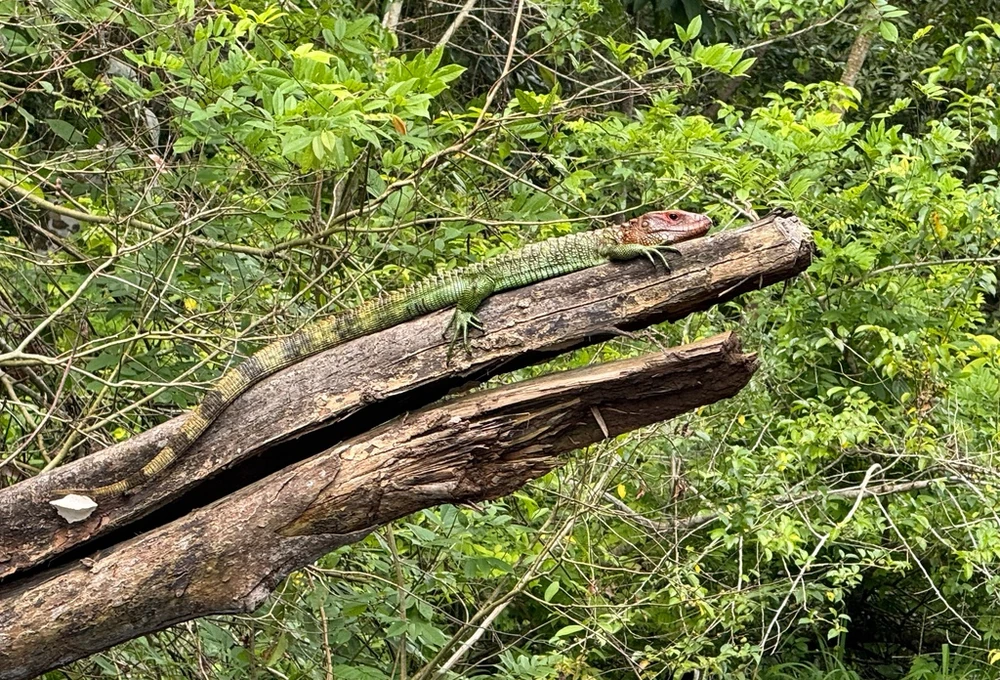
- Swampy habitats and flooded woodlands, including marshes, flooded forests, and stream margins; often basks on low branches or roots over water.
- Diet
- Carnivorous; mainly eats hard-shelled aquatic or semiaquatic invertebrates, including snails, crawfish, and freshwater clams. It is also reported to prey on Amazon river turtles.
Facts
- A green body, reddish-orange head, laterally flattened tail, and raised horn-like scales along the back make this lizard distinctive. Its short, rounded teeth and powerful jaws are suited to its hard-shelled prey.
- Its diet centers on aquatic or semiaquatic animals with shells, including snails, crawfish, and freshwater clams. Powerful jaws help it crush this type of prey.
- The tail is flattened from side to side, helping the lizard swim. A clear third eyelid functions underwater.
- Low branches and exposed roots over water can serve as basking places. If disturbed, the lizard may drop from a branch into the water to escape.
- Eggs are placed in covered holes in riverbanks, and the young hatch independently after roughly 179 days of incubation.
Print and study the Northern caiman lizard
This species is included in: